When the Thai capital was moved across the Chao Phraya River from Thonburi in 1782, the new city was laid out on a bend of the river and protected by canals dug across the land side. The area inside those canals, Rattanakosin island, became the royal and religious heart of Bangkok. It still is. The Grand Palace, the most revered temples in the country, government buildings, a university and the great royal field all lie within it, in an area small enough to walk.
The heat is the main obstacle. This sheet follows a route from the river pier at Tha Tien, through Wat Pho and past the palace walls to Sanam Luang, then back to the river for the ferry to Wat Arun in the late afternoon.
The best way to reach Rattanakosin is by boat. The Chao Phraya Express boats run up and down the river, stopping at piers along the way, and Tha Tien pier lies right beside Wat Pho. Arriving on the water gives you the river breeze, views of temples on both banks and a sense of how the city was originally connected: by water, not roads.
Tha Tien itself is a small, busy neighbourhood of old shophouses, with markets selling dried seafood and snacks. Walk a couple of minutes inland, and you reach the walls of Wat Pho. Early in the morning, before the temples open, the pier and its lanes are at their most lively, with porters unloading goods, monks returning from their alms rounds and the first ferries crossing to the Thonburi side.
Wat Pho and the reclining Buddha
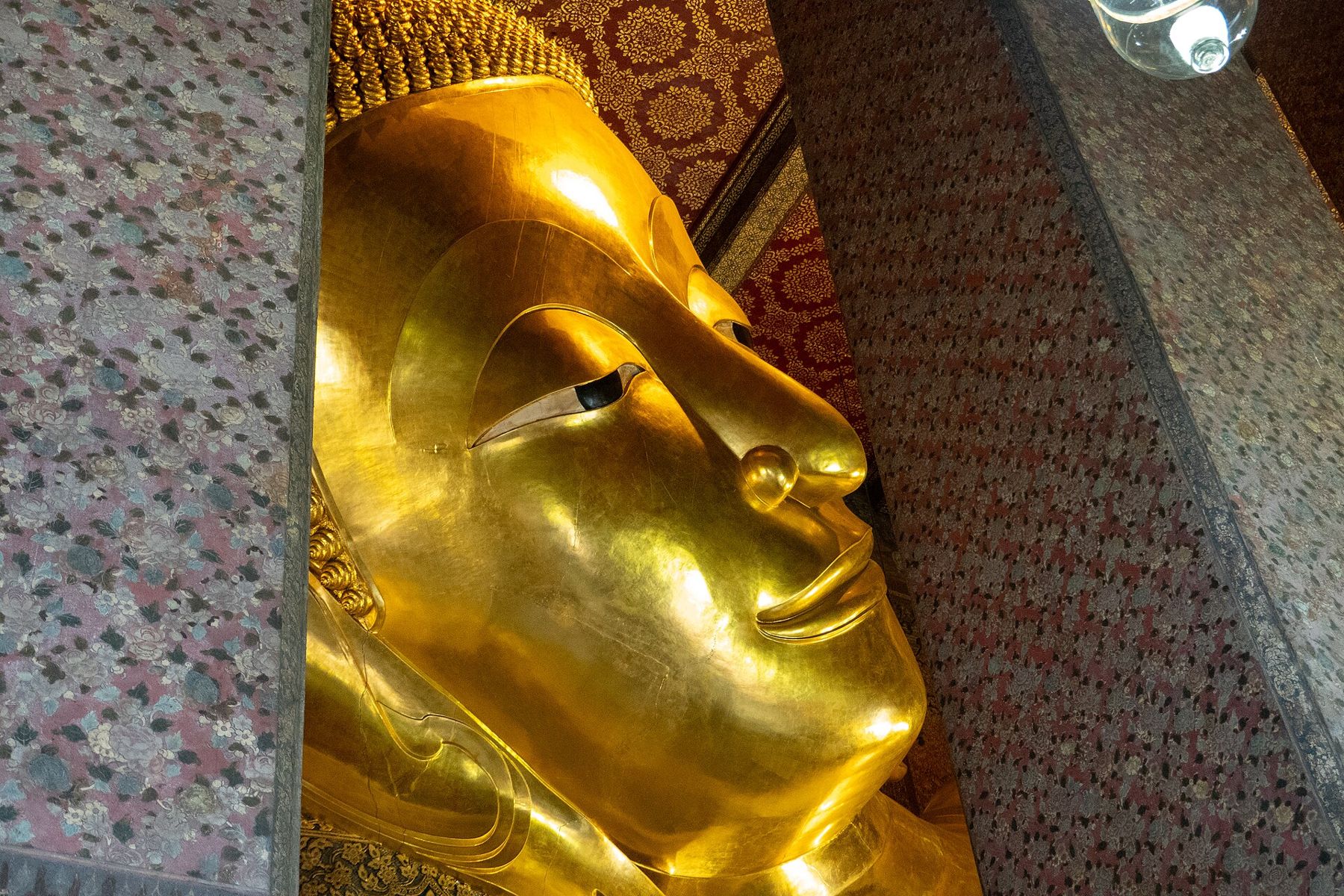
Wat Pho is one of the oldest and largest temple complexes in Bangkok. Its most famous image is the reclining Buddha, a gilded figure about 46 metres long, lying on its side with its head propped on one hand. The image fills a long hall so completely that it is hard to see it whole. Walk slowly from the head to the feet, where the soles are inlaid with mother-of-pearl patterns showing auspicious symbols.
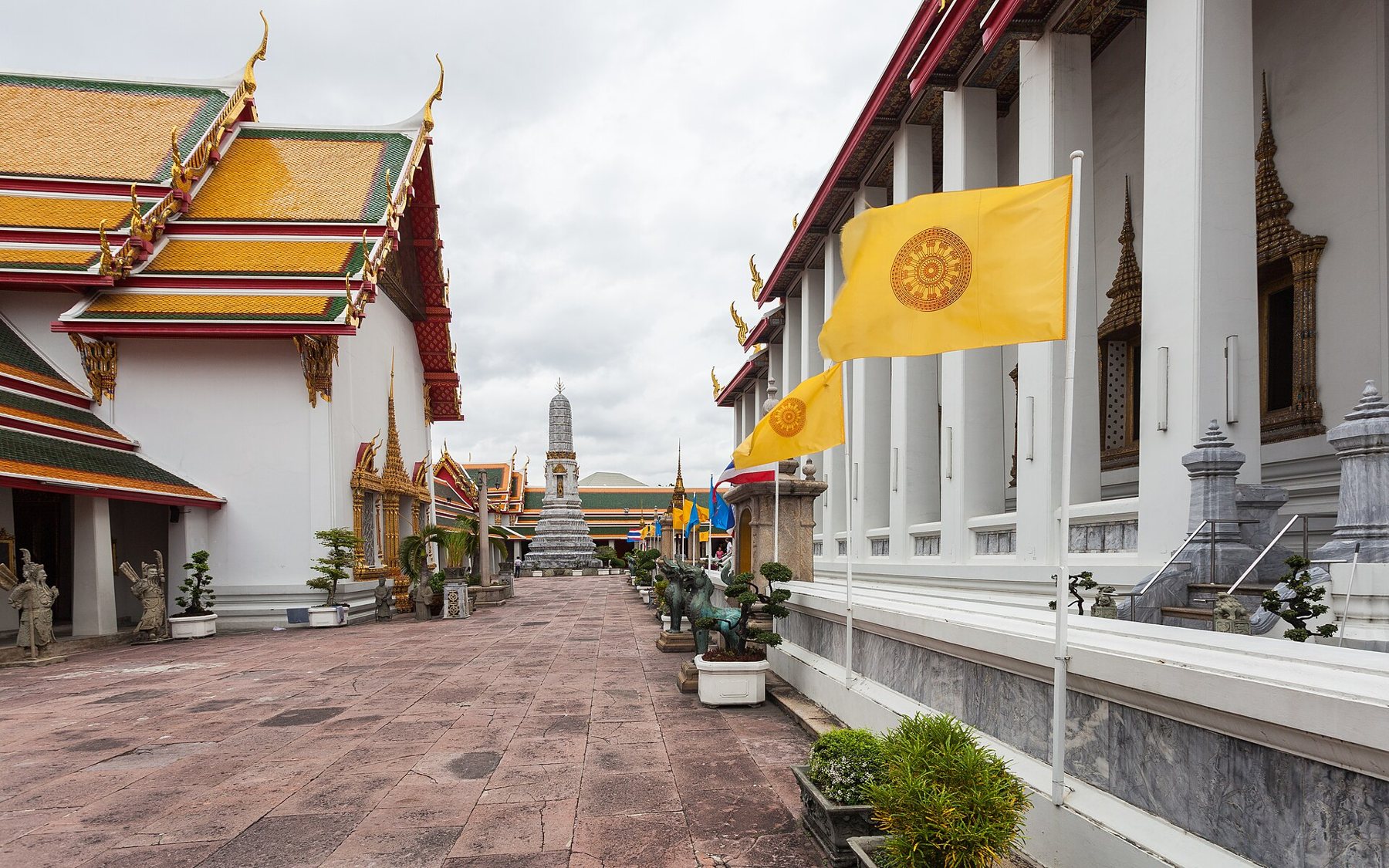
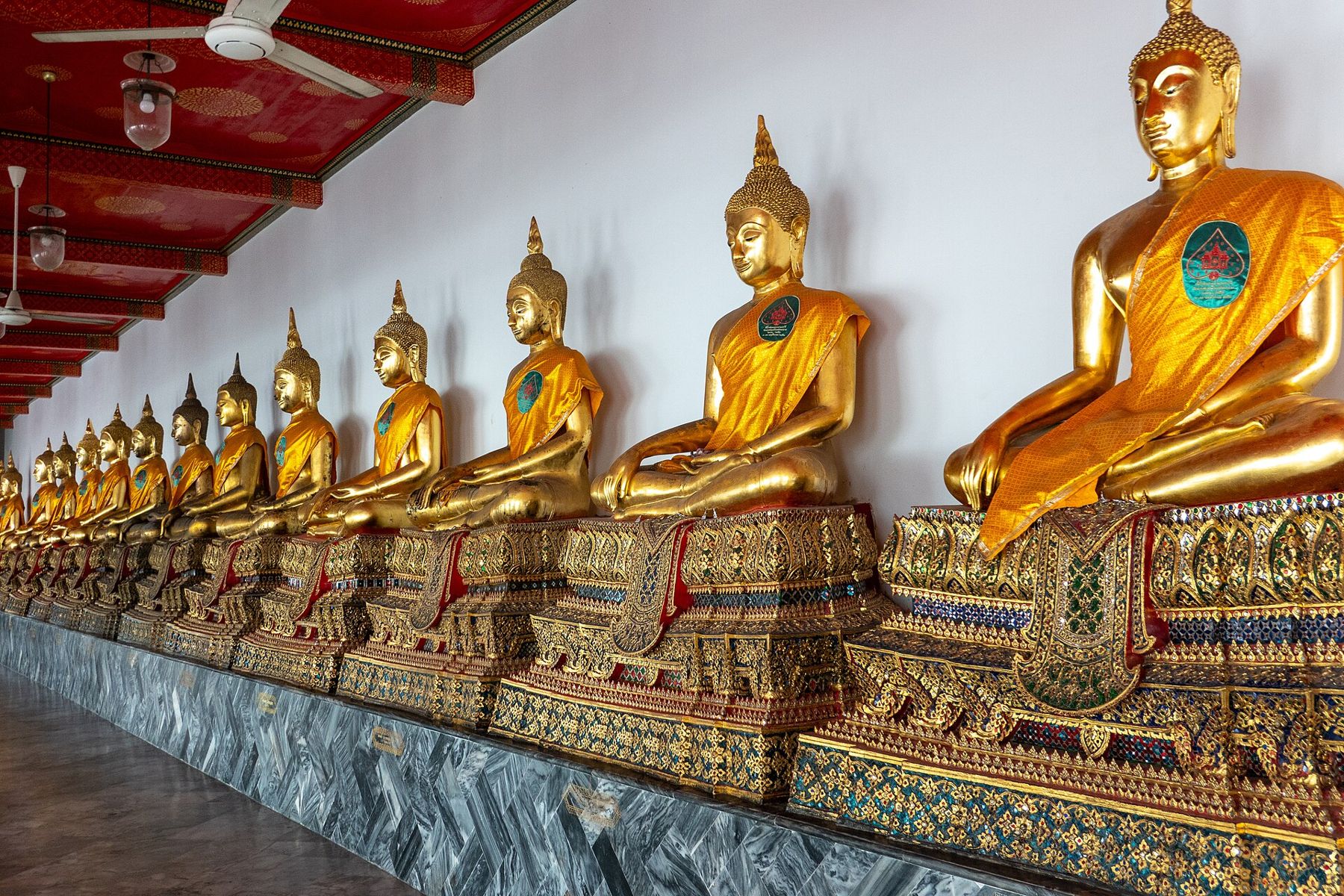
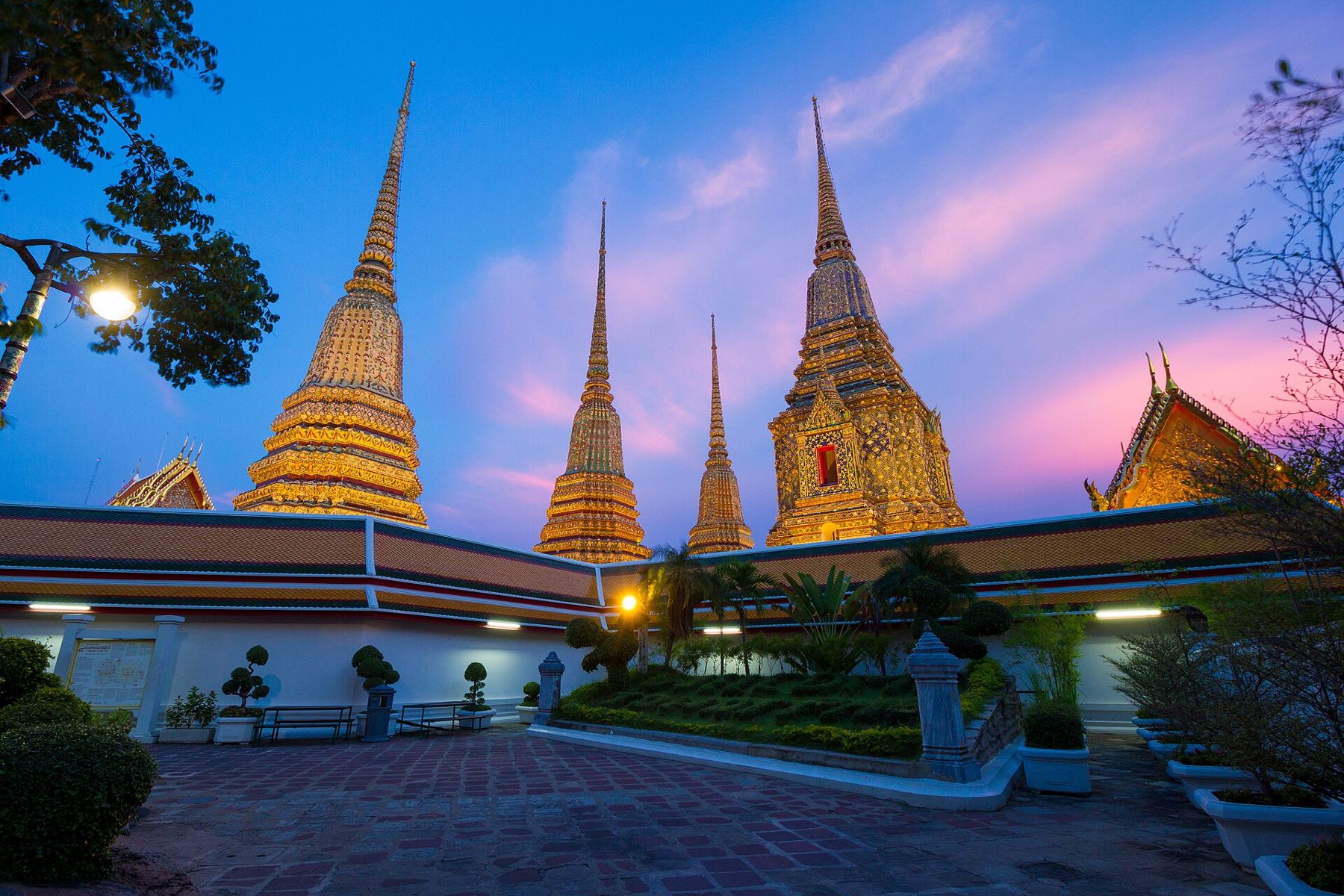
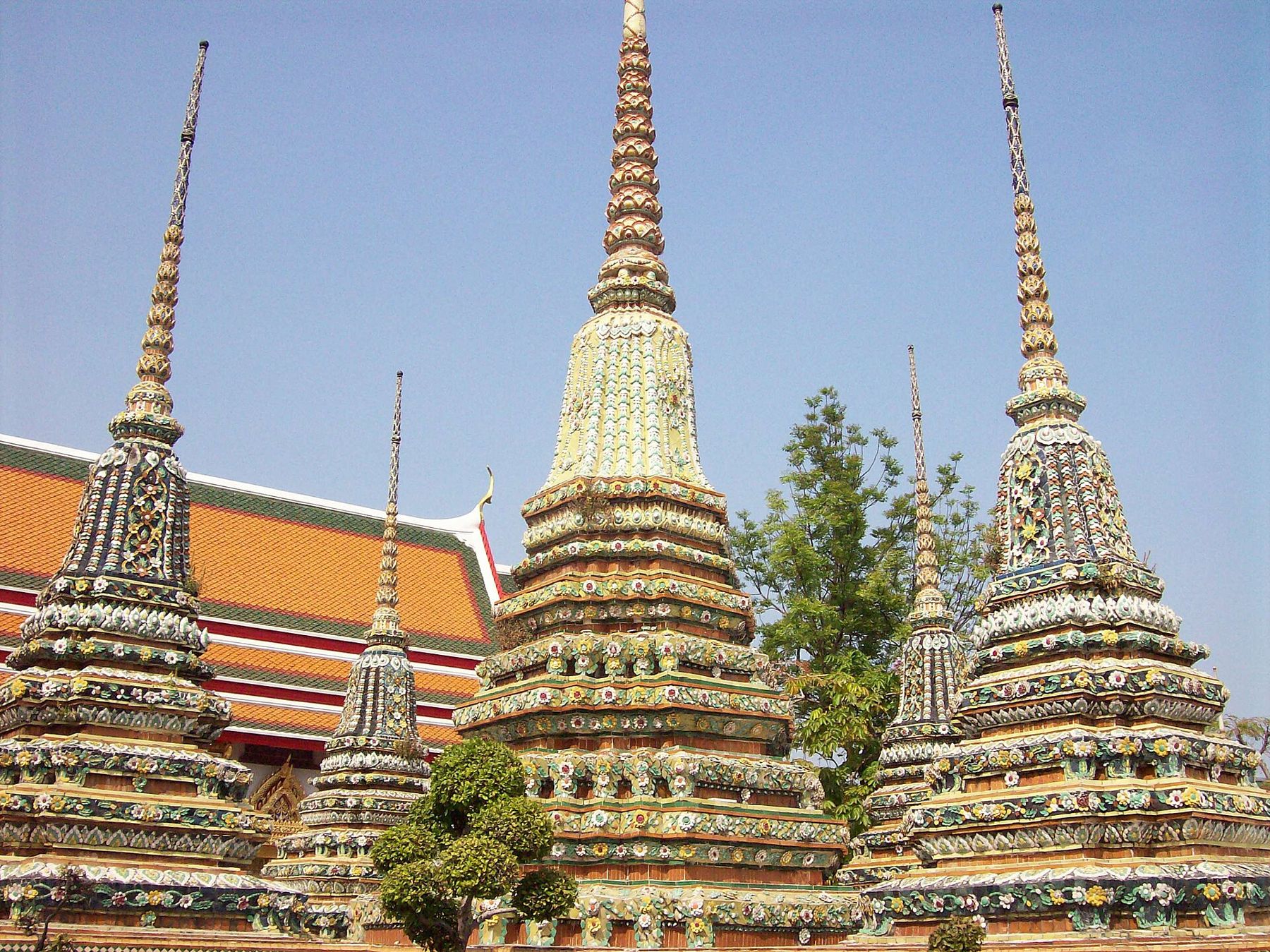
The rest of the compound is just as rewarding and usually quieter. Courtyards hold hundreds of Buddha images in long galleries, tall chedis decorated with coloured ceramic tiles, stone statues and small gardens. Wat Pho is also known as a centre of traditional Thai medicine and massage, and a school still teaches there. Visit early, when the courtyards are cooler and before the tour groups arrive.
i
Along the palace walls
North of Wat Pho, the white crenellated walls of the Grand Palace run for long stretches beside the road. Inside are the royal palace buildings and Wat Phra Kaew, the temple of the Emerald Buddha, the most sacred Buddha image in Thailand. The palace is open to visitors daily but closes in the afternoon, and it can close at short notice for royal ceremonies. The dress code is strict: shoulders and knees must be covered, and tight or see-through clothes are not allowed.
Visiting the palace takes at least two hours and is a separate undertaking. If you do go, aim to arrive at opening time, and come back to the rest of this walk afterwards.
North of the palace lies Sanam Luang, a large open field used for royal ceremonies, including cremations of kings and the annual ploughing ceremony. Around it stand the city pillar shrine, the National Museum and Wat Mahathat, an important temple and centre of Buddhist learning. Along the river, the area near Tha Phra Chan pier is known for its market of Buddhist amulets, where buyers inspect small images with magnifying glasses.
Fold over to A4Talat Noi's lanes of engine parts and shrinesThe streets here are less crowded than around the palace, with university students, monks and shophouses selling religious goods. Maha Rat Road runs along the river side of the island, linking the piers and temples from Tha Tien up to Tha Phra Chan.
i
Across the river to Wat Arun
Return to Tha Tien in the late afternoon and take the short cross-river ferry to Wat Arun, the Temple of Dawn, on the Thonburi bank. Its central tower, a tall prang in a style inherited from Khmer architecture, is decorated with fragments of coloured porcelain and seashells arranged in flower patterns. Visitors can climb partway up the steep steps for views over the river.
Despite its name, Wat Arun is at its best at the end of the day, when the setting sun lights it from the west, or after dark, when it is floodlit. The view of the temple from the Tha Tien side of the river at dusk is one of the classic sights of Bangkok.
i
The canals that made an island
The canals that ring Rattanakosin were dug in the late eighteenth century, and they gave the royal city a moat on its land side. A second, outer ring of canals followed as the city grew. Several of the old forts that guarded the canal mouths have disappeared, but two survive on the edge of the island, along with a stretch of the old city wall. Walk east from Sanam Luang towards the Democracy Monument and you cross the inner canal, a quiet strip of water between the busy roads.
For centuries, Bangkok's main streets were its waterways, and the river and canals still carry ferries, long-tail boats and commuter boats. Seeing the island from the water, even for a short ride, explains its shape better than any map.
Dress, manners and scams
Temple dress codes apply throughout the island: cover shoulders and knees, and remove shoes before entering any building with Buddha images. Do not point your feet at Buddha images or monks, and women should not touch monks or hand things to them directly.
Around the palace, be wary of people who approach to say that the palace or a temple is closed for the day and offer to take you somewhere else instead. This is a long-running scam that ends in an overpriced boat ride or a visit to a gem shop. Check the opening times yourself at the gate. Agree any tuk-tuk fare before you set off.
The heat is the main obstacle.
i
Timing and nearby sheets
The cool season, from November to February, is the most comfortable time to walk. The hottest months, March to May, make midday walking hard work. Whatever the season, start early, rest in the middle of the day and save the river for the evening. Just downstream lie Chinatown and Talat Noi, an older riverside quarter; for another royal city on a river peninsula, see Luang Prabang. Opening hours and fees change, so check them for Bangkok before you go.