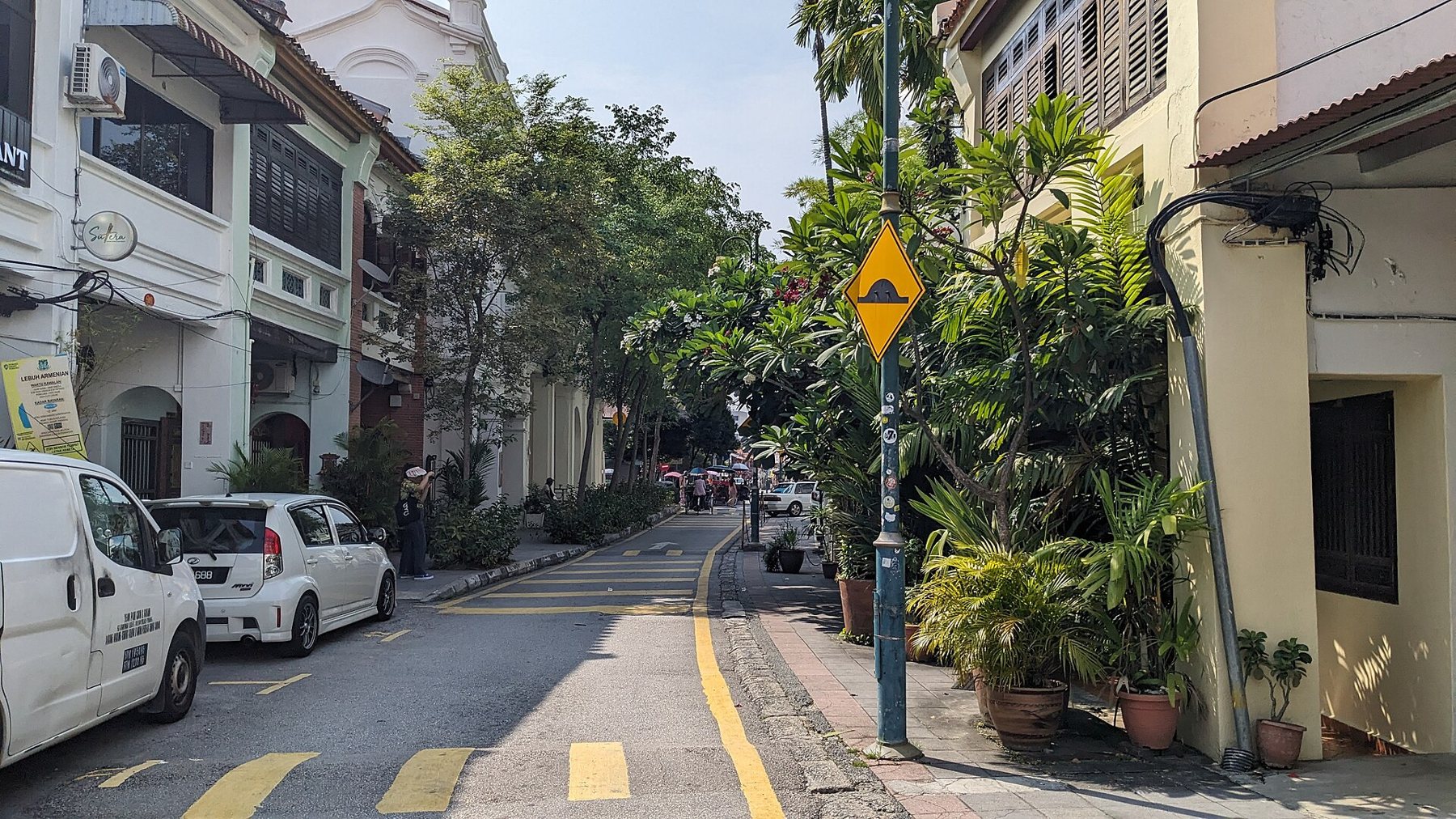
George Town grew up around a harbour at the north-east tip of Penang Island in the late eighteenth century, and its old core still follows the street plan laid out in those first decades. Traders came from China, India, the Malay world, Arabia, Armenia and Europe, each community building its own temples, mosques, churches and meeting halls within a few hundred metres of each other. The result is one of the densest historic townscapes in Asia, and since 2008 it has been a UNESCO World Heritage Site together with Melaka.
This sheet covers the heart of it: Armenian Street and the clan houses on either side, then the so-called Street of Harmony a few blocks east. It is a walk of about three kilometres, with long pauses, and it is best started early.
Shophouses and the five-foot way
The building you will see most is the shophouse: two or three storeys, narrow and deep, with a business on the ground floor and living quarters above. Rows of them line every street, their facades painted in faded pastels, with shuttered windows, decorative plasterwork and tiled fronts. Some date from the early nineteenth century; others were rebuilt in Art Deco style in the 1930s.
In front of each row runs a covered walkway, the five-foot way, set back under the upper floors. It was required by colonial building rules across the Straits towns, and it is the single most useful thing to know about walking here: it is where the shade is. Move from one five-foot way to the next and you can cross half the old town without stepping into the sun. Expect the walkway to be interrupted by steps, parked motorbikes and goods set out by shopkeepers.
i
Armenian Street, west to east
Armenian Street, Lebuh Armenian in Malay, takes its name from a small community of Armenian merchants who lived here in the early nineteenth century. Little of their presence remains beyond the name. What you find instead is a quiet street of restored shophouses, small museums and craft workshops, with several of the island's best-known murals painted on its walls.
Start at the western end, where the street meets Cannon Street. From here, a narrow passage leads into Cannon Square, a small open space surrounded by clan buildings. Walk east slowly, ducking into the five-foot ways, and look up: the upper floors hold carved timber, painted panels and old signboards in Chinese characters.
About halfway along, at number 120, a shophouse museum marks the house where Sun Yat-sen's revolutionary movement held a meeting in 1910 to plan an uprising in southern China. A little further on, the Yap Kongsi, a clan temple with a bright, decorated facade, sits on the corner with Lebuh Pitt.
i
The clan houses
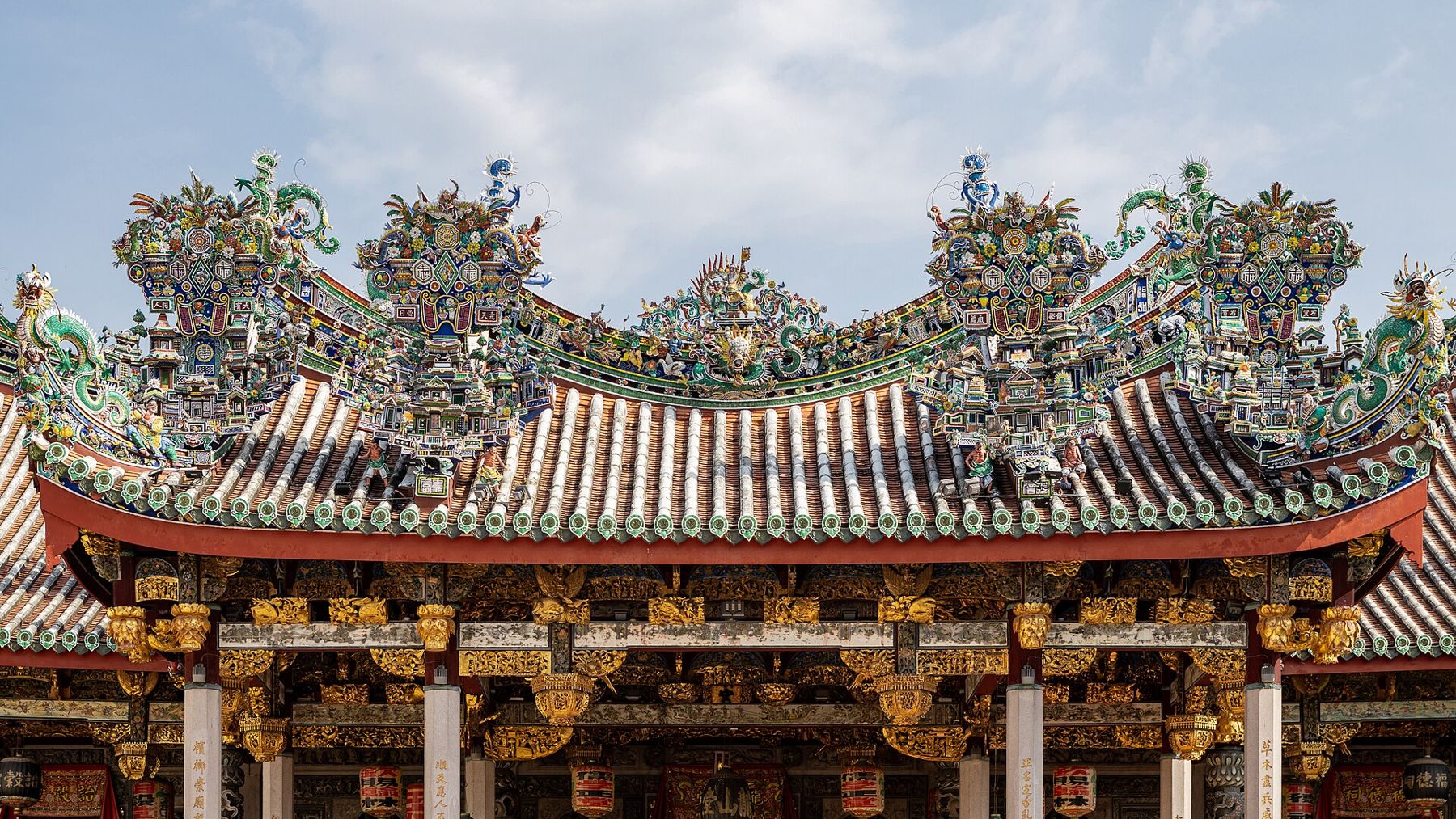
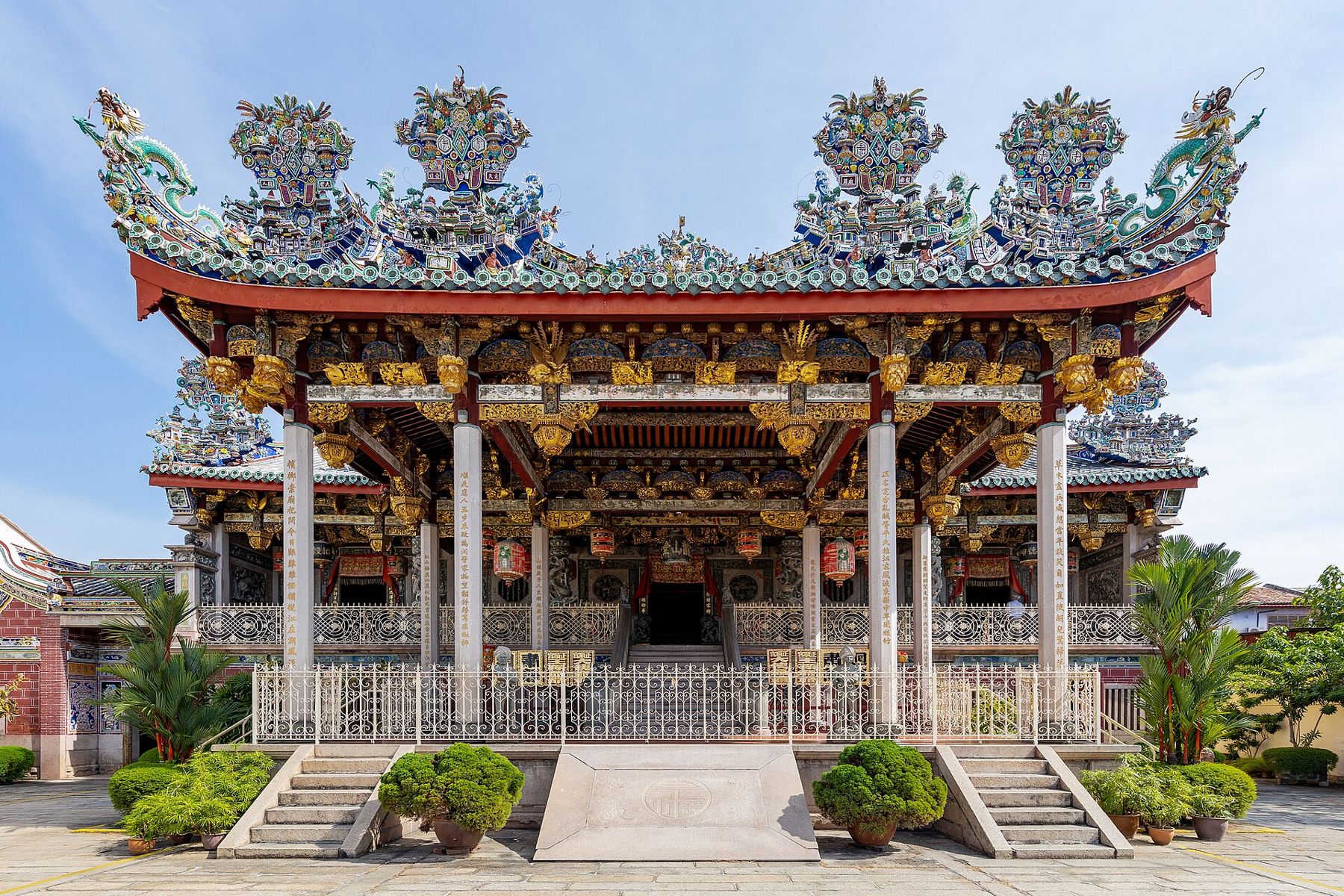
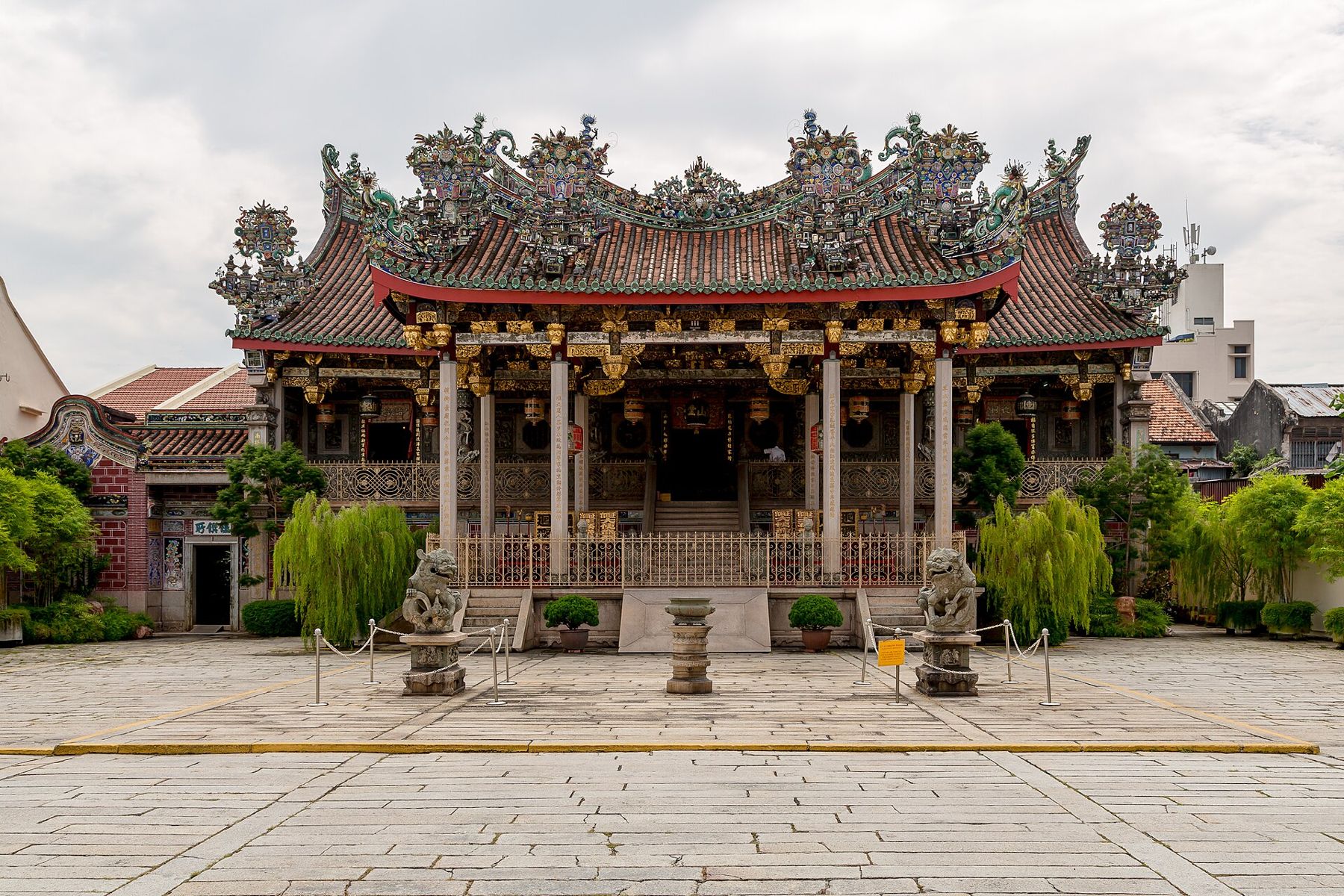
Kongsi is the Hokkien term for a clan association, a society of families sharing a surname and an ancestral home district in China. In nineteenth-century George Town, the kongsi provided lodging, welfare, protection and a place to honour ancestors. The richest built halls to show their standing, and the grandest of all is the Khoo Kongsi, reached from Cannon Square.
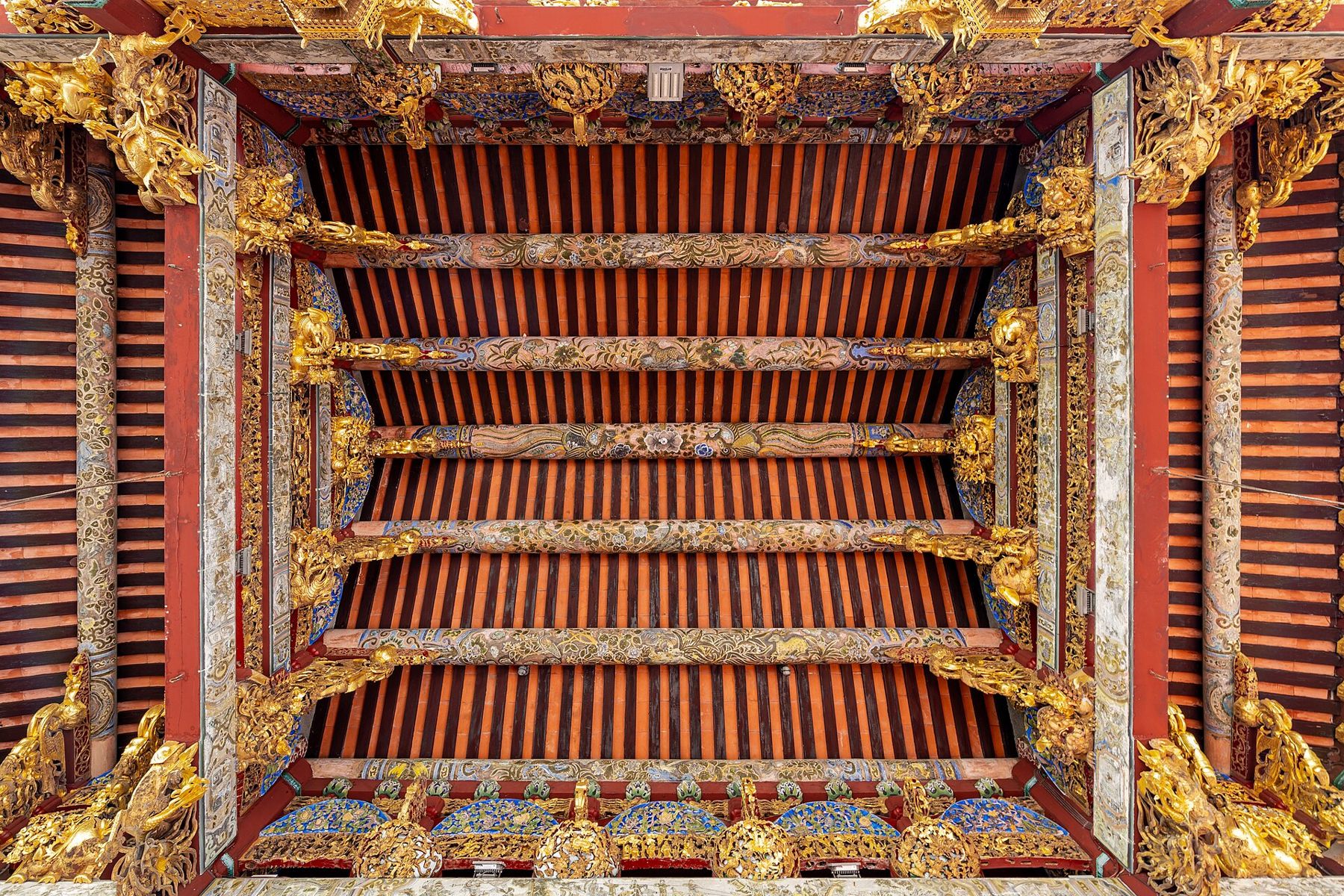
Fold over to B1The clan jetties, plank by plankThe Khoo Kongsi's main hall stands on a raised granite platform, its roof crowded with carved and painted figures, dragons and flowers in ceramic, its interior glowing with gold leaf and dark wood. Across the courtyard stand an opera stage and the clan's administrative buildings, the whole complex enclosed by rows of terrace houses where clan members once lived. It is open to visitors for a fee, and a visit takes about an hour. Go early, when the courtyard is quiet and the light falls softly on the carvings.
Other clan houses, such as the Cheah Kongsi on Armenian Street itself and smaller jetty and surname halls nearby, are less elaborate but often quieter. Some are still active, with members meeting and ceremonies held on festival days. If a hall door stands open and no sign asks visitors to stay out, a quiet look from the threshold is usually welcome; if in doubt, ask before stepping inside, and never photograph people at prayer.
i
Murals, and a mosque on Acheen Street
In the early 2010s, murals and wrought-iron cartoons began appearing on walls across the old town, many of them commissioned for an arts festival. The best known, two children riding a real bicycle fixed to the wall, is on Armenian Street, and there is often a queue to be photographed with it. Others are tucked into side lanes and are easier to enjoy. Some have faded or been painted over; new ones appear from time to time.
A few minutes south-west, on Acheen Street, the Malay mosque and its distinctive minaret date from the early nineteenth century, built for a community of traders from Aceh in Sumatra. The surrounding lanes are some of the quietest in the old town, a good place to slow down.
The Street of Harmony
From the eastern end of Armenian Street, walk north to Lebuh Pitt, also called Jalan Masjid Kapitan Keling. Within a few hundred metres stand the Kapitan Keling Mosque, the Goddess of Mercy Temple, the Sri Mahamariamman Temple and St George's Church, one of the oldest Anglican churches in South-East Asia. The street is sometimes called the Street of Harmony for the way these faiths have stood side by side for two centuries.
Each is an active place of worship. Dress modestly, with shoulders and knees covered, and remove shoes where asked. The mosque may lend robes to visitors outside prayer times; the temples welcome quiet visitors, and incense smoke drifts out onto the street from early morning.
Move from one five-foot way to the next and you can cross half the old town without stepping into the sun.
i
Where the walk ends
From St George's Church, the walk can continue north to Fort Cornwallis and the waterfront esplanade, or east to the old banks and offices of Beach Street. A few blocks further south are the clan jetties, the waterfront villages built on stilts. Many walkers end here, in the late morning, before the heat drives them indoors.
George Town has much in common with Melaka, its sister on the Straits, and the two make a natural pair for a week in Malaysia. Penang is reached by bridges and ferries from the mainland, and its airport has flights across the region. Opening hours, entry fees and the details of the murals change often, so confirm them on the day you walk.