In the late sixteenth century, the Spanish rulers of Manila set aside land across the Pasig River from Intramuros for Chinese merchants who had converted to Catholicism. The settlement, Binondo, became the centre of Chinese trade in the city, and it has remained a Chinese-Filipino district ever since. It is often described as the oldest Chinatown in the world, a claim based on its founding date, and whatever the truth of that, its long history is clear in its streets.
Beside Binondo, Escolta Street was Manila's main commercial street in the late nineteenth and early twentieth centuries, lined with department stores, banks and offices. Both districts were badly damaged in the Second World War, and both have changed since, but they keep a strong sense of the old city.
Across Jones Bridge
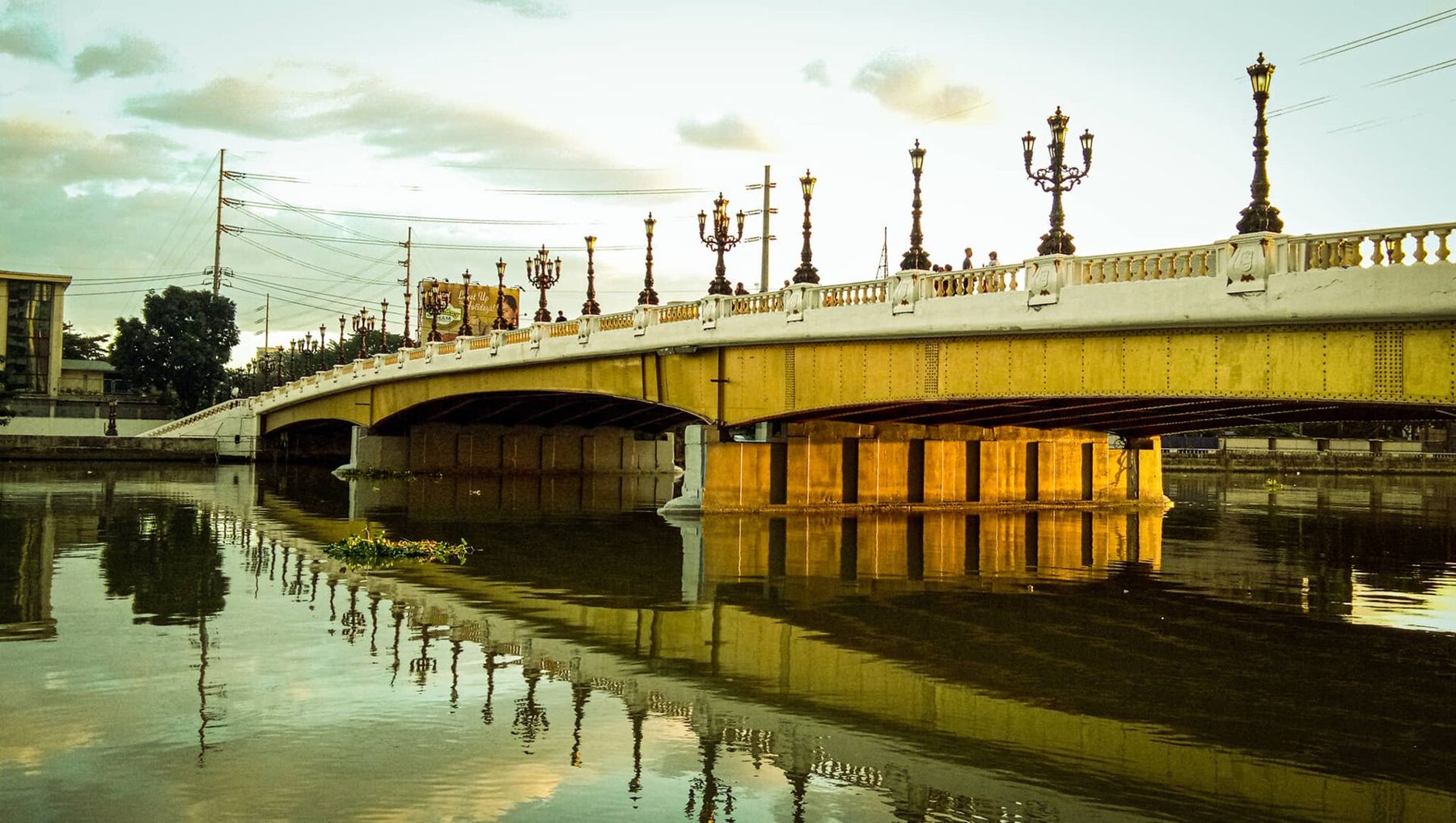
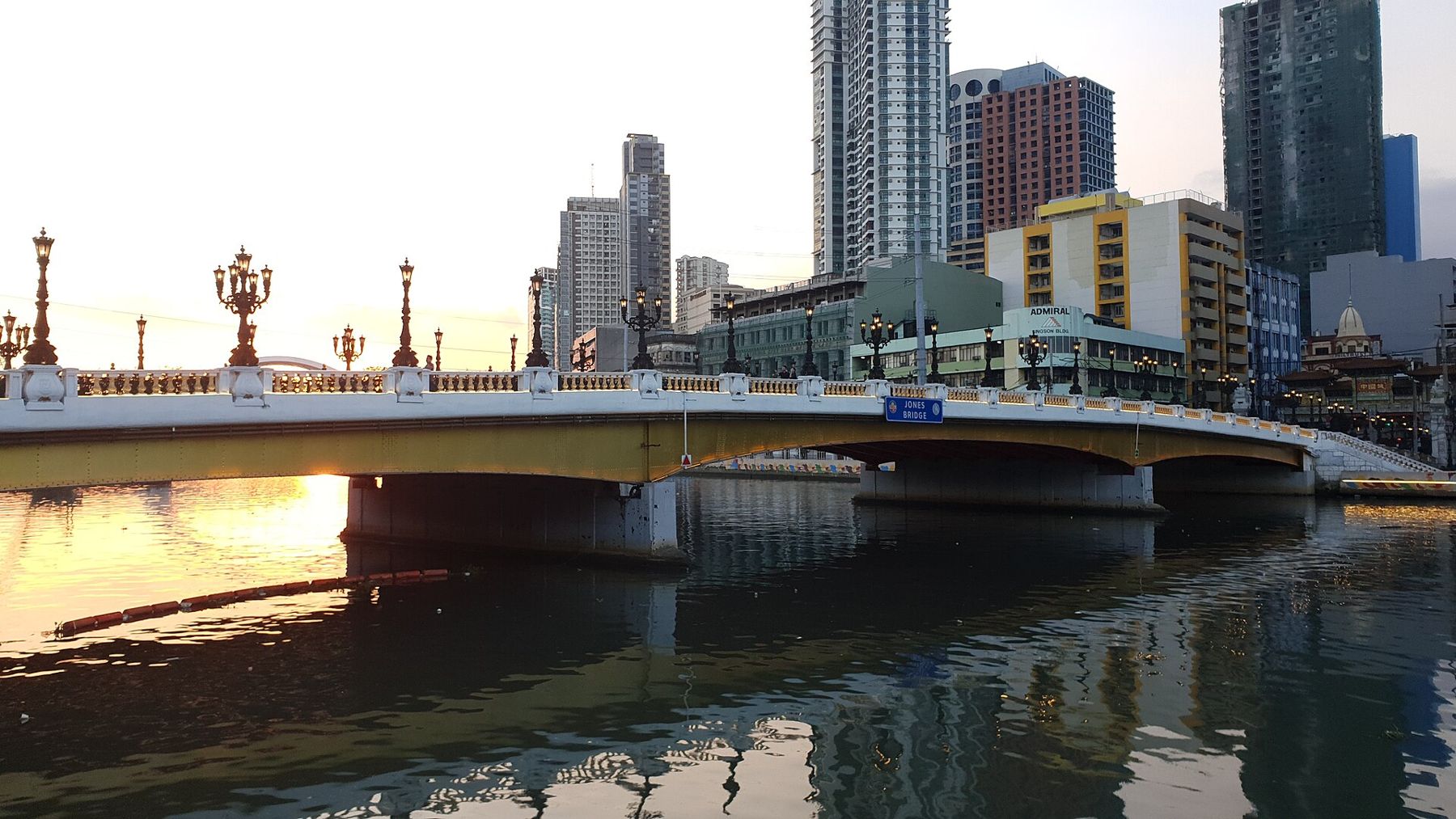
The walk starts by crossing the Pasig from Intramuros on Jones Bridge. Built in the early twentieth century and rebuilt after the war, it was restored in recent years with lamps and sculptures, and the views from it take in the river, Fort Santiago and the old buildings on the Binondo bank. The river is busy with ferries and barges, and the bridge is busy with traffic, so take care.
From the northern end of the bridge, streets lead into the heart of Binondo.
i
Binondo Church
The main church of Binondo stands at the end of a plaza. Founded in the late sixteenth century for the Chinese Catholic community, it has been rebuilt several times after earthquakes and war. Its octagonal bell tower, which survived the destruction of 1945, reflects Chinese influence in its shape. The church is dedicated to San Lorenzo Ruiz, a Chinese-Filipino who was the first saint from the Philippines, and it is an active parish church with regular masses.
Inside, the church is bright and spacious, with painted ceilings. Visitors are welcome outside service times; dress modestly and keep quiet.
Ongpin Street and the arch
Ongpin Street is the main street of Chinatown, lined with shops selling gold jewellery, Chinese medicines, tea and sweets. Its entrances are marked by large decorated arches. The street is crowded and noisy, with traffic, vendors and shoppers sharing the narrow space, and it is at its most lively in the morning and around Chinese New Year.
The side streets and alleys off Ongpin hold more shops, small temples and food stalls. Binondo is famous for its food, from dumplings and noodles to hopia pastries and fried snacks, and many visitors come mainly to eat. The best approach is to wander, follow the queues and try small portions in several places.
Escolta's pre-war buildings
Fold over to A5Round Intramuros on top of the wallsA few minutes' walk east, Escolta Street runs parallel to the river. In its heyday, it was the most fashionable street in Manila, with the first department stores, cinemas and banks in the city. Several of its early twentieth-century buildings survived the war, and they give Escolta a distinctive character: Beaux-Arts and Art Deco facades, carved stone details and old shop signs, some restored and some faded.
The street lost its commercial importance as business moved to newer districts, and many buildings stood empty for years. In recent times, creative businesses, markets and galleries have moved into some of them, and heritage groups have worked to protect the remaining buildings. Walk the street slowly, and look up at the upper storeys, where the original details are best preserved. Look for the names and dates moulded into the facades, the iron balconies and the old clocks; some buildings carry the names of the firms that built them a century ago, long after the firms themselves disappeared. Weekend markets and events sometimes fill the street, bringing crowds back to a place that was quiet for decades.
Temples and the Chinese-Filipino community
Binondo's population is largely Chinese-Filipino, many of them descended from Hokkien traders, and the district holds Buddhist and Taoist temples as well as Catholic churches. Small temples, some on the upper floors of ordinary buildings, are busy with worshippers burning incense and offering fruit. Larger temples nearby are open to respectful visitors.
The mixture of faiths is part of Binondo's history. Many families kept both Catholic and Chinese religious traditions, and it is not unusual to see Catholic saints and Chinese deities side by side in homes and shops. Festivals such as Chinese New Year bring dragon and lion dances to the streets, and the district is packed with visitors.
Canals and side streets
Binondo is crossed by several esteros, narrow canals that once carried goods to the warehouses and shops. Some have been cleaned and given walkways in recent years. The streets beside them hold old warehouses, small factories and homes, a working side of the district that few visitors see.
Calesas, the horse-drawn carriages of old Manila, still wait for passengers in parts of Binondo and offer short tours of the district. Agree the route and the fare before you climb aboard, and remember that the streets are narrow and busy, so a ride can be slow at rush hour.
Trains to the confluence
Binondo is easy to reach on foot from Intramuros across Jones Bridge, or by taxi from other parts of the city. The nearest LRT stations are a short walk away. Mornings are best, before the traffic and the heat peak, and weekdays are busier with commerce while weekends are busier with visitors. Opening hours and access to buildings change, so check them for Manila before you go. For a quieter colonial town with stone houses, see Vigan in the north.