The name Kuala Lumpur means muddy confluence in Malay. The city grew from a tin-mining settlement founded in the mid-nineteenth century at the point where the Gombak River flows into the Klang. Within a few decades it had become the capital of the Federated Malay States, and the British built an administrative centre beside the river, with a cricket ground at its heart. That ground is now Merdeka Square, and the buildings around it form the city's historic core.
Today the old core sits in the shadow of glass towers and elevated railways, but it is compact and easy to walk. Start at the confluence, cross the square and finish in the old commercial streets to the south.
The mosque at the confluence
Masjid Jamek stands on the narrow point of land where the two rivers meet, the spot where the city began. Completed in 1909, it is the oldest major mosque in Kuala Lumpur, built of red brick and white plaster with onion domes and slender minarets in a style that borrows from Mughal India. Palm trees surround it, and the riverbanks below have been landscaped with walkways.
The mosque is open to visitors outside prayer times. Dress modestly, with arms and legs covered; robes and headscarves are usually lent at the entrance. Remove your shoes before entering the prayer areas, and stay out of any part marked for worshippers only.
i
The river of life
For much of the twentieth century, the rivers at the confluence were channelled into concrete banks and largely ignored. A long project to clean the water and reshape the banks has turned the area into a public space, with walkways on both sides, fountains and murals. After dark, the river channel and the mosque are lit, and blue mist and coloured lights create a scene that draws photographers and evening walkers.
Come back at dusk if you can, when the light fades and the lights come on. The view of the mosque from the footbridges nearby is the classic one.
Merdeka Square
A short walk west from the mosque brings you to Merdeka Square, Dataran Merdeka, a long lawn surrounded by colonial buildings. Merdeka means independence. At midnight on 31 August 1957, the British flag was lowered and the flag of independent Malaya raised here for the first time. A tall flagpole at the southern end marks the spot, and the square is still the setting for national celebrations every year on 31 August.
On the west side of the square stands a long, black-and-white clubhouse in mock-Tudor style, built for the colonial social club that once used the cricket ground. On the north side, St Mary's Cathedral, a white Gothic church from the late nineteenth century, is one of the oldest Anglican churches in the country.
Fold over to A1Armenian Street and the clan houses of George TownThe Sultan Abdul Samad Building
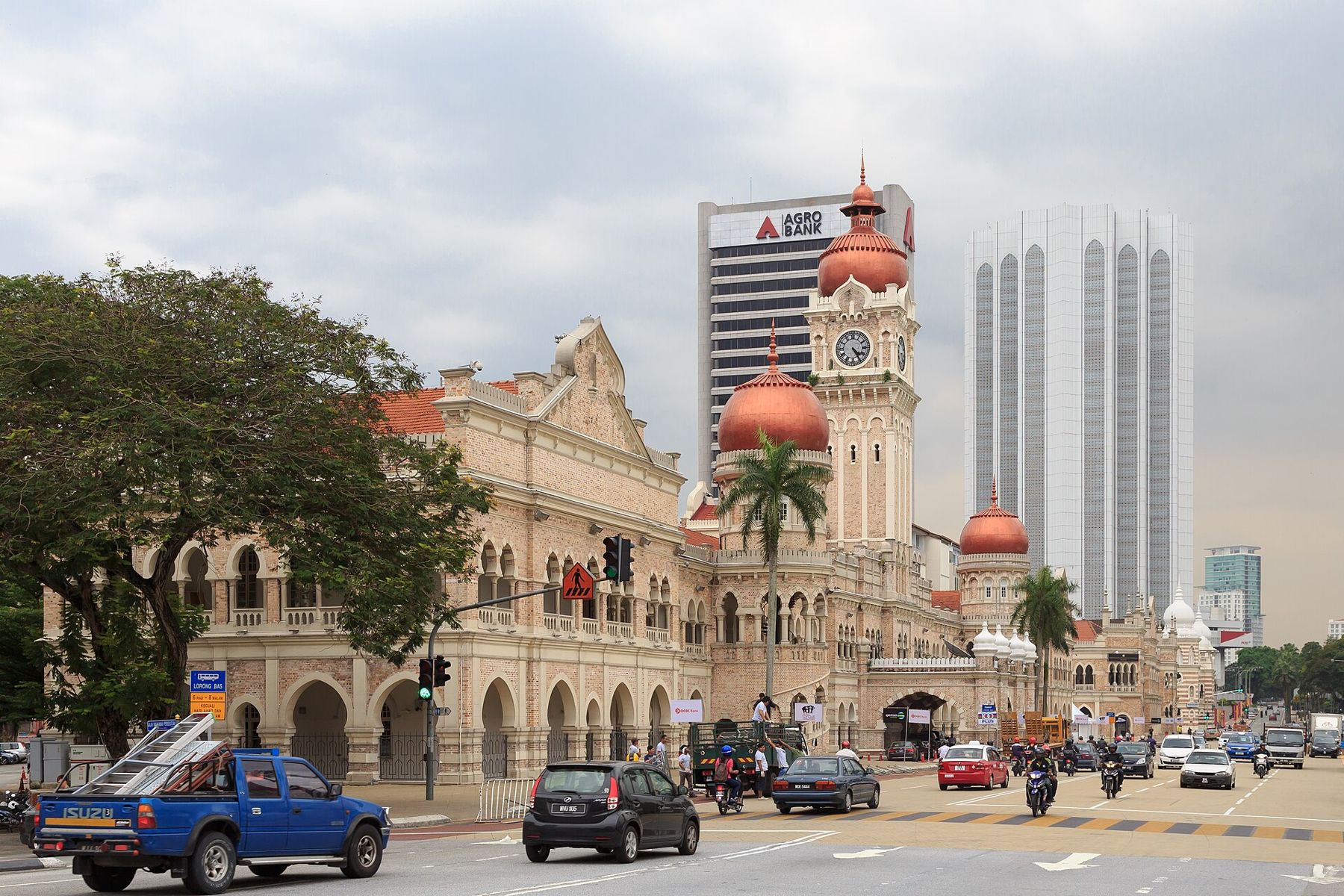
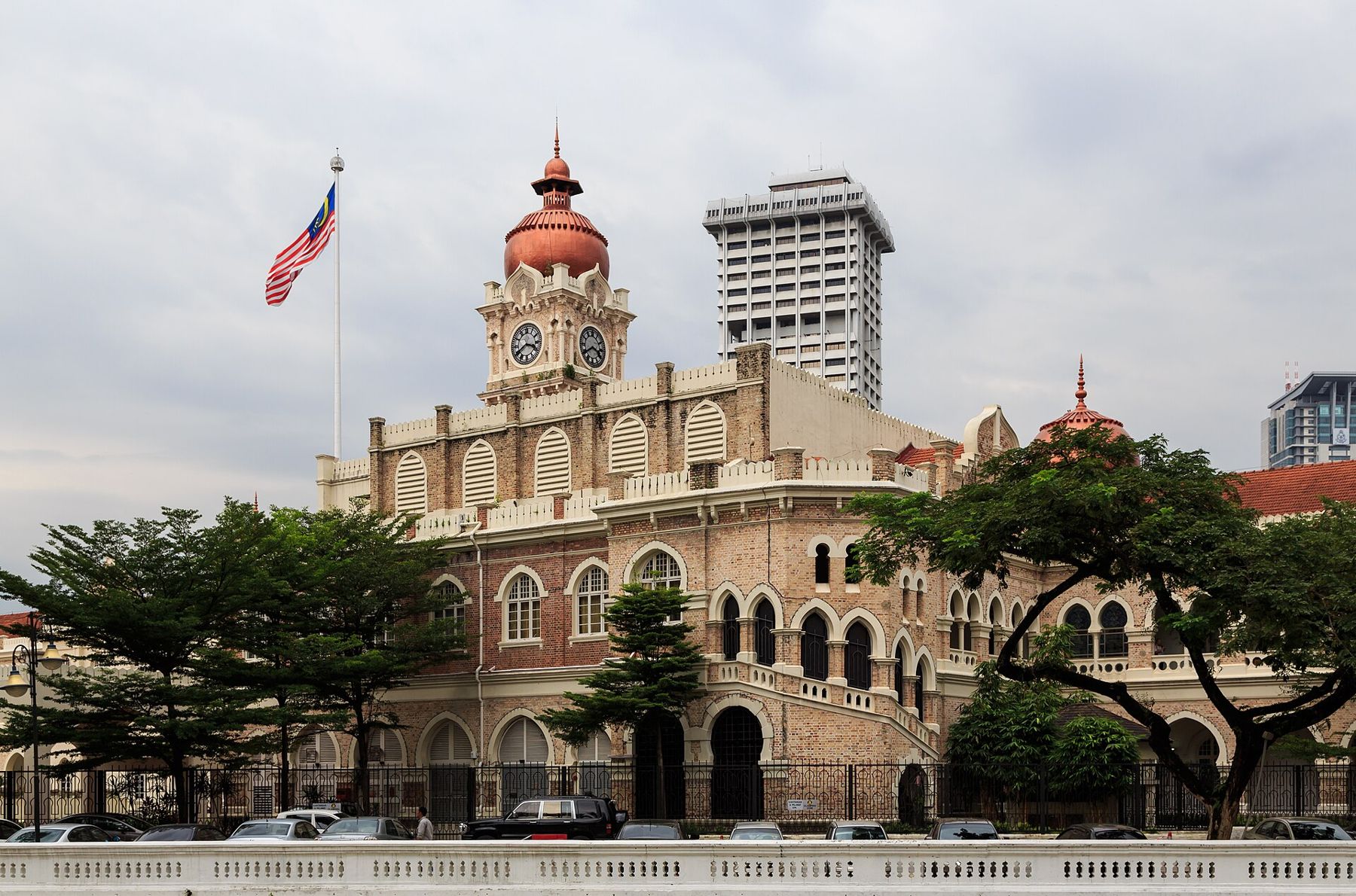
The east side of the square is lined by the Sultan Abdul Samad Building, completed in 1897 as the offices of the colonial government. With its copper domes, horseshoe arches and a central clock tower about 40 metres high, it is the grandest example of the style the British used across their territories in this region, mixing Moorish, Mughal and Gothic influences. It housed government offices and courts for many years. The building is most striking at night, when it is lit along its whole length.
Along the arcades at street level, the covered walkways offer shade, and the views across the square to the clubhouse and the flagpole are open.
The old market square and Central Market
South of the confluence, the streets of the old commercial district lead to the Old Market Square, Medan Pasar, once the heart of the early town, where a small Art Deco clock tower from the 1930s now stands. Shophouses and old bank buildings line the surrounding streets, some restored and many faded.
A little further south, Central Market, Pasar Seni, occupies a long Art Deco building in blue and white, built as a wet market in the 1930s and now home to stalls selling crafts, batik and souvenirs. It is air-conditioned, a welcome break on a hot day.
Chinatown and the temples
Just beyond Central Market lies Petaling Street, the centre of Kuala Lumpur's Chinatown, with a covered market street and lanes of shophouses. Within a few minutes' walk are the Sri Mahamariamman Temple, the oldest Hindu temple in the city, founded in the late nineteenth century, with a tall, colourful tower over its gateway, and the Guan Di Temple, dedicated to a Chinese god of war and loyalty.
Both temples are active places of worship. Remove your shoes before entering the Hindu temple, dress modestly, and ask before taking photographs inside.
Weekends bring families, joggers and wedding photographers to the square, and the old buildings around it host exhibitions and events. On weekday mornings, the lawn is quieter and the light is best for seeing the facades in detail.
Trains to the confluence
The Masjid Jamek LRT station, where two light rail lines meet, is a few steps from the mosque and the square. Pasar Seni station, on the other side of the river, serves Central Market and Chinatown. Start early, before the heat builds; the whole walk can be done in a morning. Come back after dark to see the buildings and the river lit. For older, quieter shophouse streets, take the train north to Ipoh or fly to George Town. Opening hours and access to buildings change, so check them for Kuala Lumpur before you go.