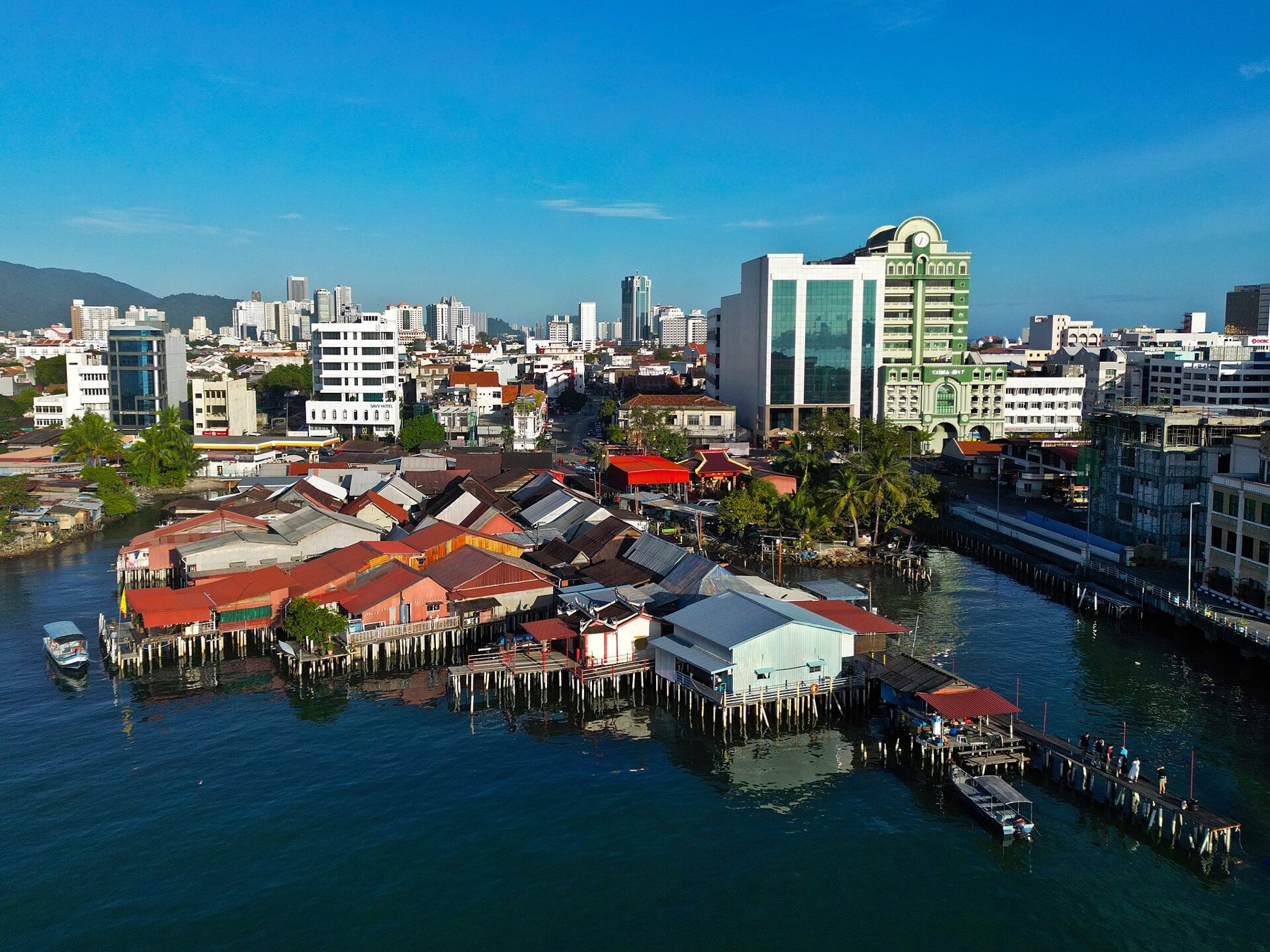
Along Weld Quay, the road that follows George Town's eastern shoreline, a row of wooden piers runs out into the strait. Along each pier stand houses on stilts, connected by plank walkways, with boats tied up below. These are the clan jetties, villages built over the water by Chinese immigrants in the late nineteenth and early twentieth centuries, each settled by families of a single clan.
They began as places where boatmen and dock workers could live close to the harbour without paying for land. Today they are a living part of the World Heritage Site, with families still at home in the houses, shrines at the end of the piers and laundry hanging between the posts.
A row of piers, one surname each
There are several jetties, each named after the clan that built it: the Chew, Lee, Tan, Lim, Yeoh and Koay jetties, among others, along with one shared by families of mixed surnames. Each has its own character. Some are short and narrow, others long, with side branches and dozens of houses.
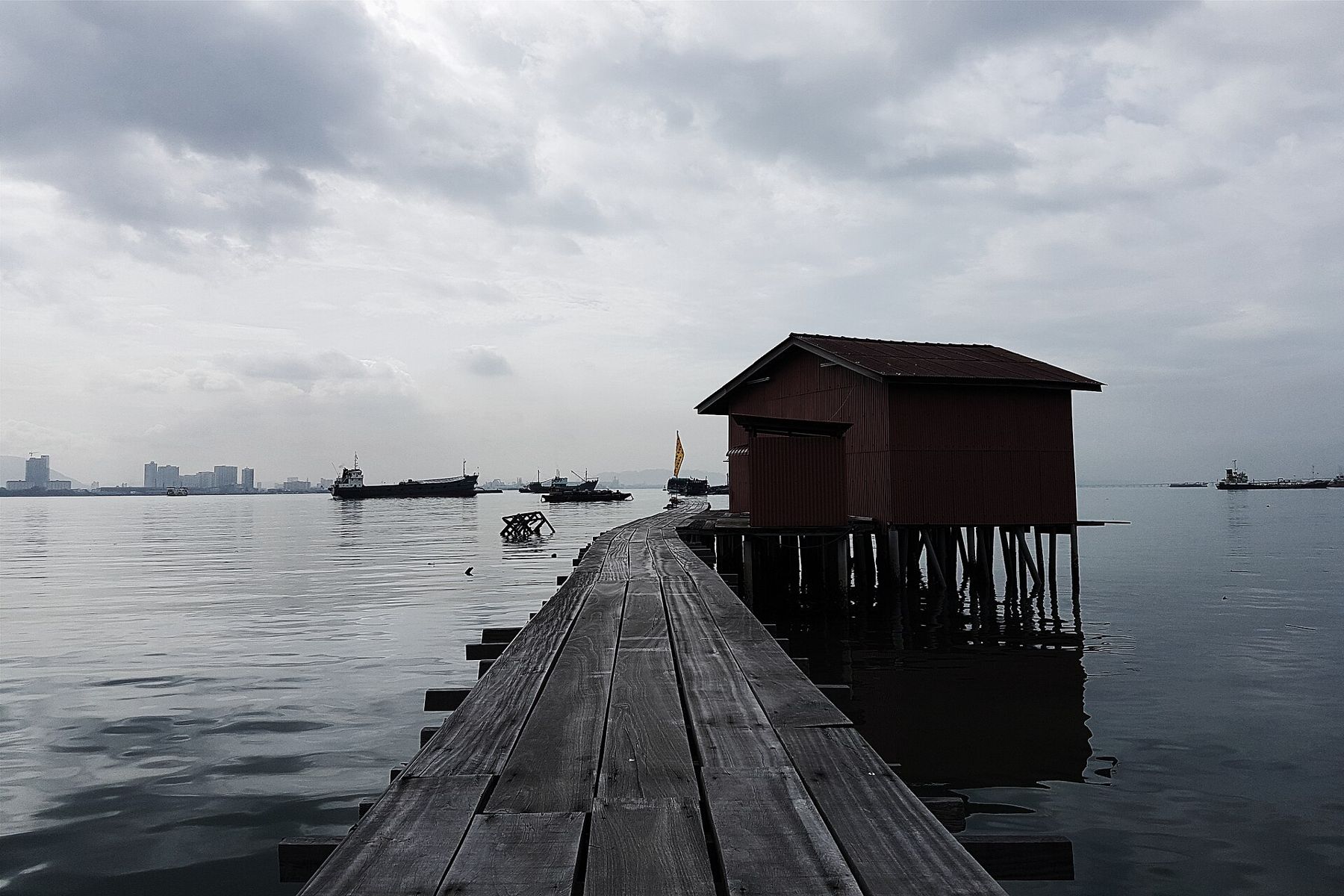
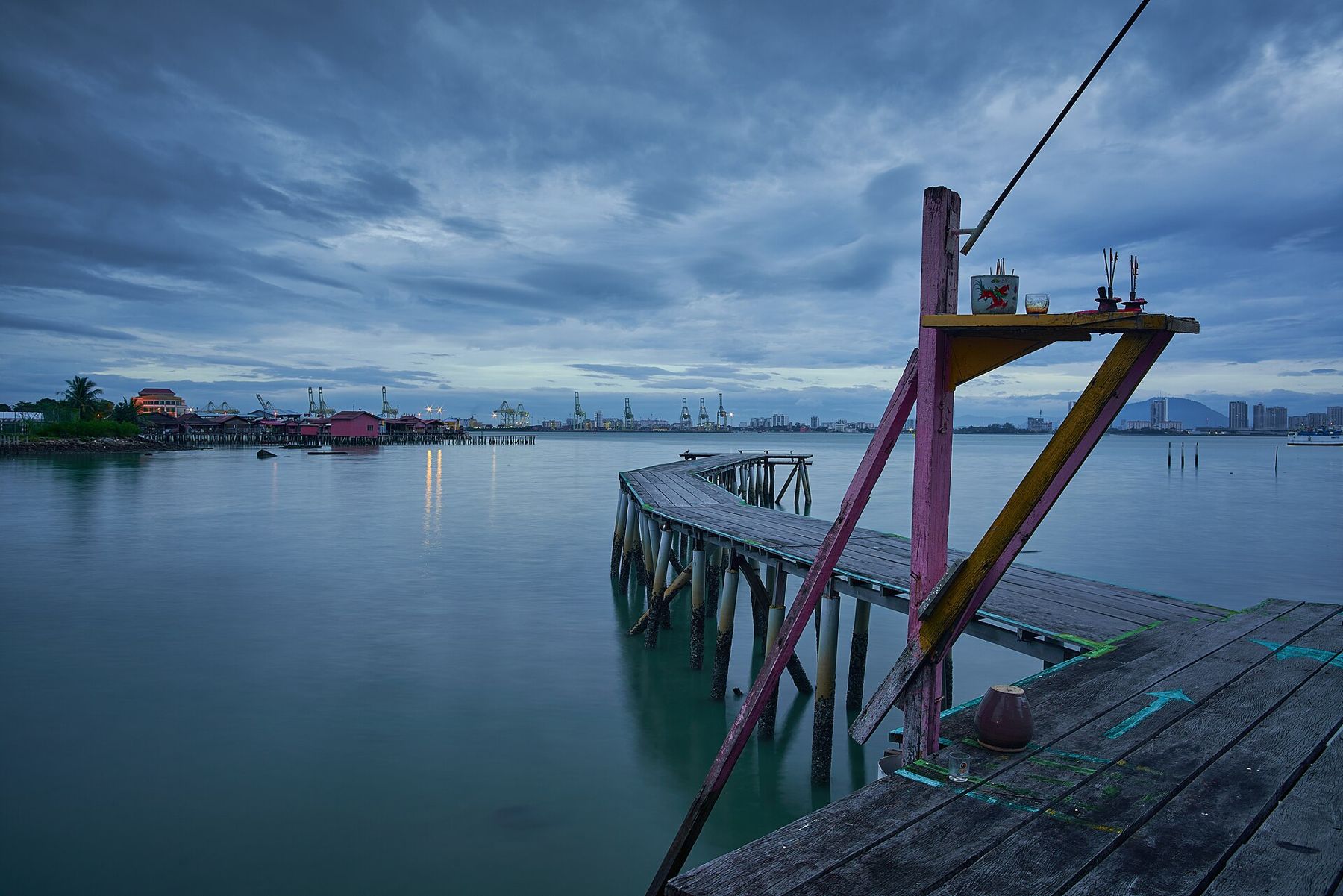
The houses are built of timber and corrugated iron, on stilts driven into the seabed. Many have been rebuilt or extended over the years, so you will see old wooden houses beside newer ones. At the seaward end of most jetties there is a small temple or shrine where residents offer incense to protect the community and those at sea.
i
Chew Jetty, the busy one
Chew Jetty is the largest and the most visited. Its main walkway is lined with stalls selling snacks, drinks and souvenirs, and in the middle of the day it can be crowded with tour groups. It is still a residential jetty, though, and the houses beyond the main walkway are private homes.
The best time to walk Chew Jetty is early in the morning, before the stalls open, when residents are going about their day and the light is soft on the water. At the end of the jetty, look back towards the shore for a view of the stilt houses against the town.
The quieter jetties
The other jetties see far fewer visitors and give a better sense of how the communities live. Lim Jetty, for example, has a long walkway leading out to a platform with open views across the strait to the mainland. Tan and Lee jetties are short and quiet, with a few houses and a shrine.
Many visitors stop at the first jetty they reach and turn back. Walking the length of Weld Quay and looking in on several jetties shows how varied they are, and spreads visitors more evenly.
Visiting a place where people live
Fold over to A1Armenian Street and the clan houses of George TownThe jetties are homes, not a stage set. Keep to the main walkways, and do not walk onto side branches or open decks unless invited. Do not photograph people or into houses without asking. Keep your voice down, especially in the evening, when families are at home and the jetties are quiet. Some jetties ask visitors to leave by a certain hour.
The planks can be uneven, with gaps and loose boards. Watch your step, keep children close, and be careful near the edges, where there are often no railings.
i
Festivals on the water
The jetties come alive at festival times. The biggest celebration falls on the ninth day of the Chinese New Year, the birthday of the Jade Emperor, when Hokkien communities offer thanks. At the Chew Jetty, families set up tables loaded with offerings, sugar cane stalks and lanterns, and the celebrations last through the night with fireworks and prayers. The dates follow the lunar calendar and change each year.
Other festivals, such as the Hungry Ghost month in the seventh lunar month, also bring offerings and ceremonies to the jetty shrines. Visitors are welcome to watch quietly from a respectful distance.
How the jetties came to be
In the nineteenth century, the port of George Town needed labour, and immigrants from southern China arrived in large numbers to work as porters, boatmen and traders on the busy waterfront. Many came from the same villages in Fujian province and naturally settled together. Building over the water, on land nobody owned, was cheaper than renting rooms in town, and it kept them close to the boats and the work.
The jetties grew house by house, with walkways extended as families arrived. Each clan organised its own affairs, built its own shrine and looked after its members. For decades the residents paid no land rent, and the question of who owns the jetties has come up repeatedly since. Changes to the waterfront, including land reclamation along the shore, have altered the setting, but the stilt villages have survived when many similar settlements in the region have disappeared.
Getting there, and going on
Weld Quay is a short walk south from the ferry terminal and the bus hub at the waterfront. From Armenian Street, it is about ten minutes on foot. The jetties sit close together, so it is easy to walk from one to the next along the road, though the traffic is heavy and the pavement narrow in places.
After the jetties, the old town lies just inland, and a short ferry ride across the channel brings you to the mainland. Further south on the peninsula, Melaka has its own waterfront history, along a river rather than the open sea. Opening hours for stalls and shrines vary; check locally.