Melaka sits on a river mouth on the west coast of the Malay peninsula, facing the strait that bears its name. In the fifteenth century it was the capital of a sultanate that controlled one of the busiest trade routes in the world. The Portuguese captured it in 1511, the Dutch in 1641 and the British a century and a half later. Each power left its mark, and today the old town holds a layered history in a small area. That history was recognised in 2008 when Melaka and George Town were listed together as a UNESCO World Heritage Site.
This sheet starts at the river, crosses the red buildings of Dutch Square, climbs St Paul's Hill and descends to the Portuguese gate, then returns across the river to the shophouse streets of the old Chinese quarter. It is a walk of about four kilometres, best spread over an afternoon and evening.
The red square by the river
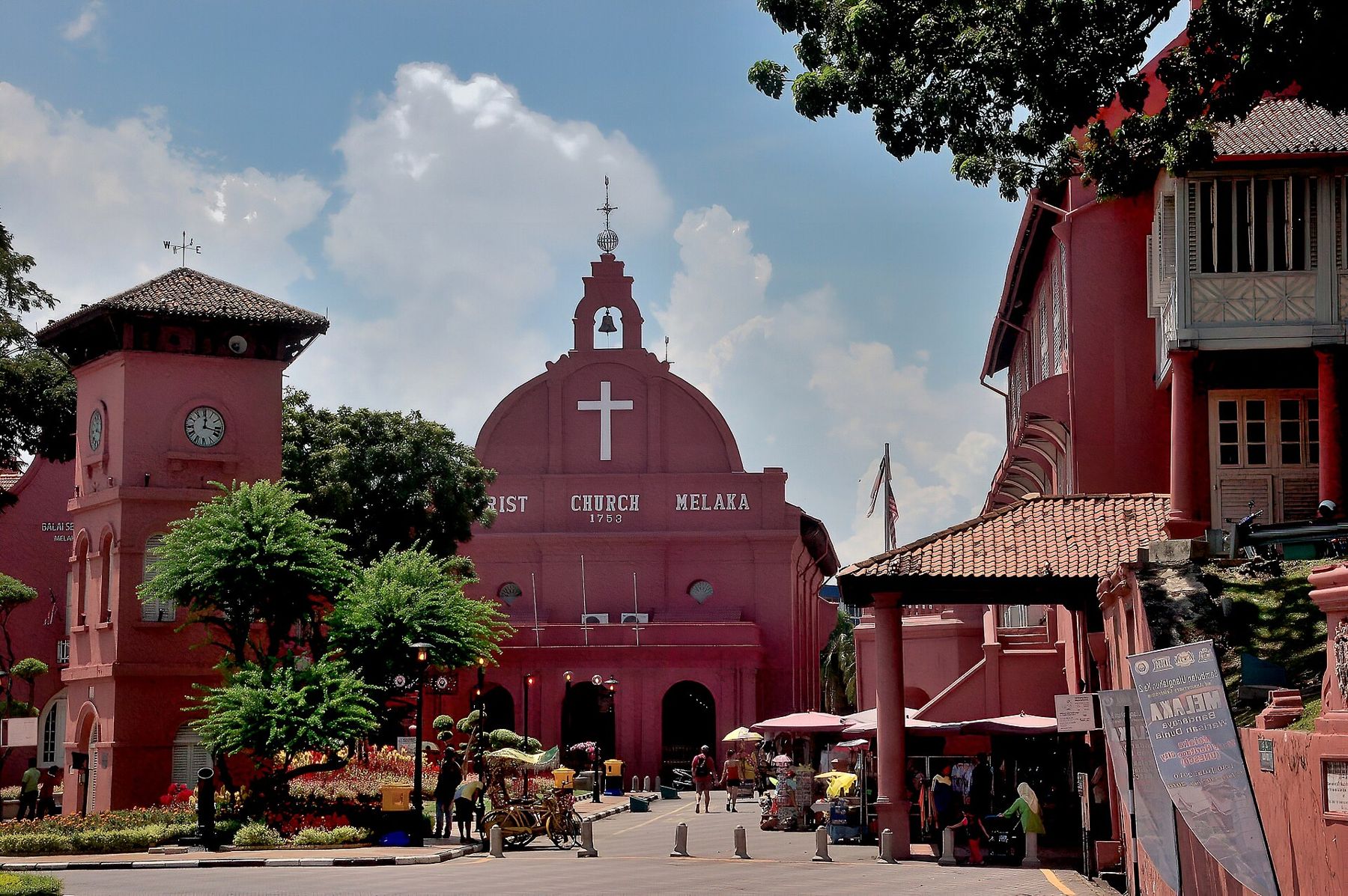
Dutch Square sits just east of the bridge over the Melaka River. Its buildings are painted a deep red, a colour applied by the British in the nineteenth century and kept ever since. The largest is the Stadthuys, built by the Dutch in the mid-seventeenth century as the town hall and governor's residence, and now a history museum. It is one of the oldest Dutch buildings in Asia.
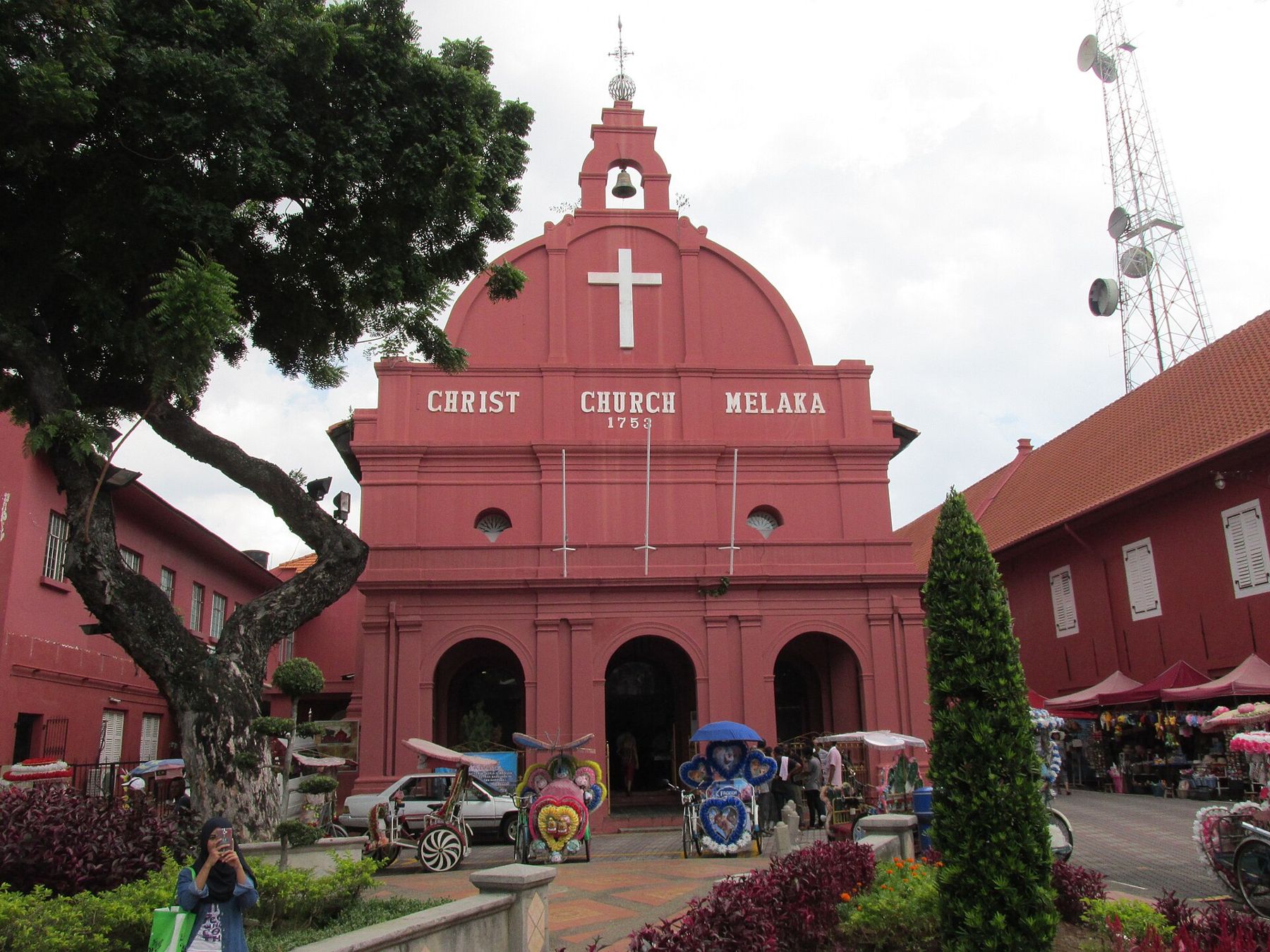
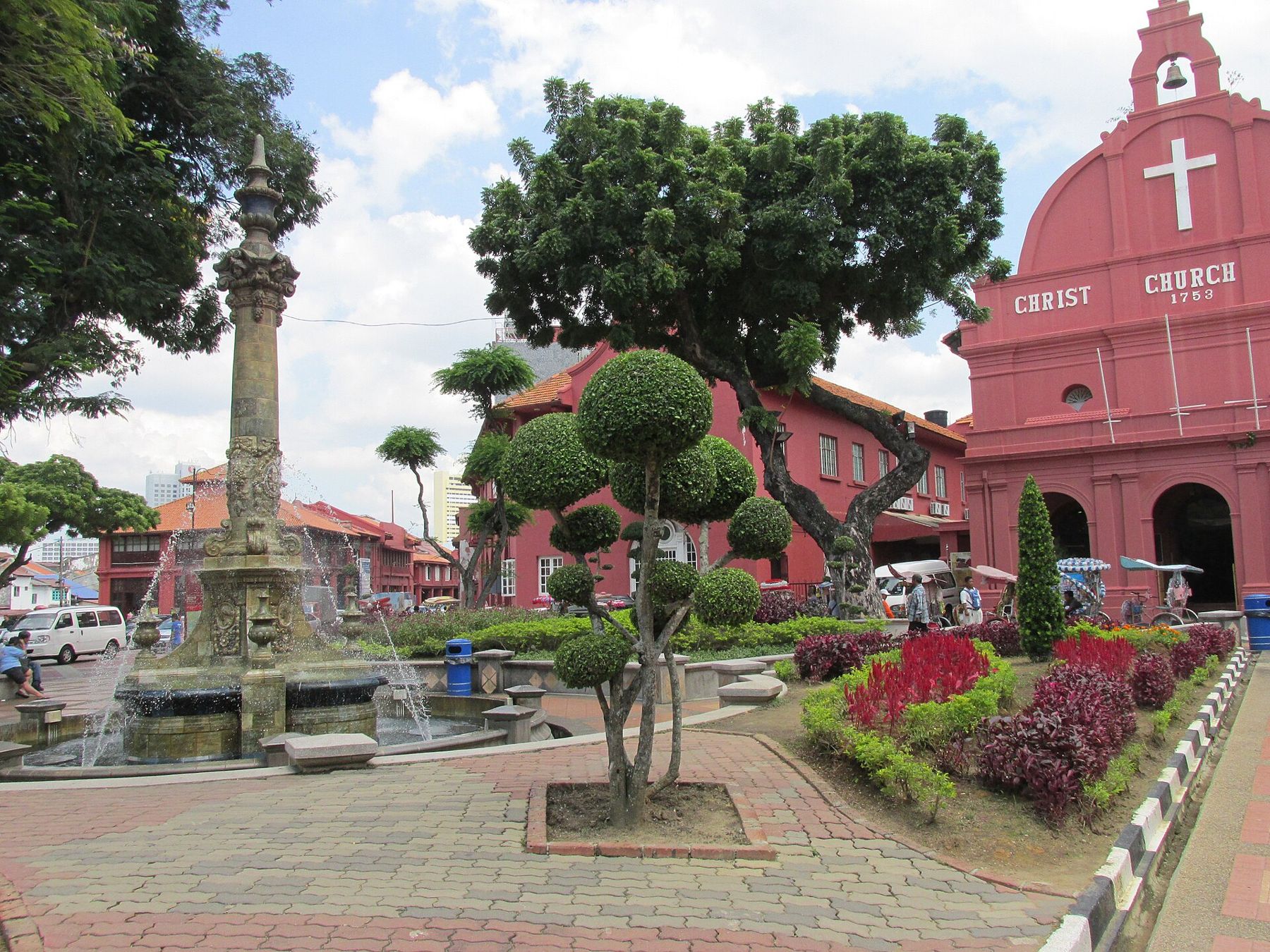
Beside it stands Christ Church, built by the Dutch in the mid-eighteenth century, with heavy timber beams and a simple interior. In the middle of the square are a clock tower and a fountain from the British period. The square is busy with tour groups and trishaws decorated with flowers, plastic figures and lights, often playing loud music.
i
Up St Paul's Hill
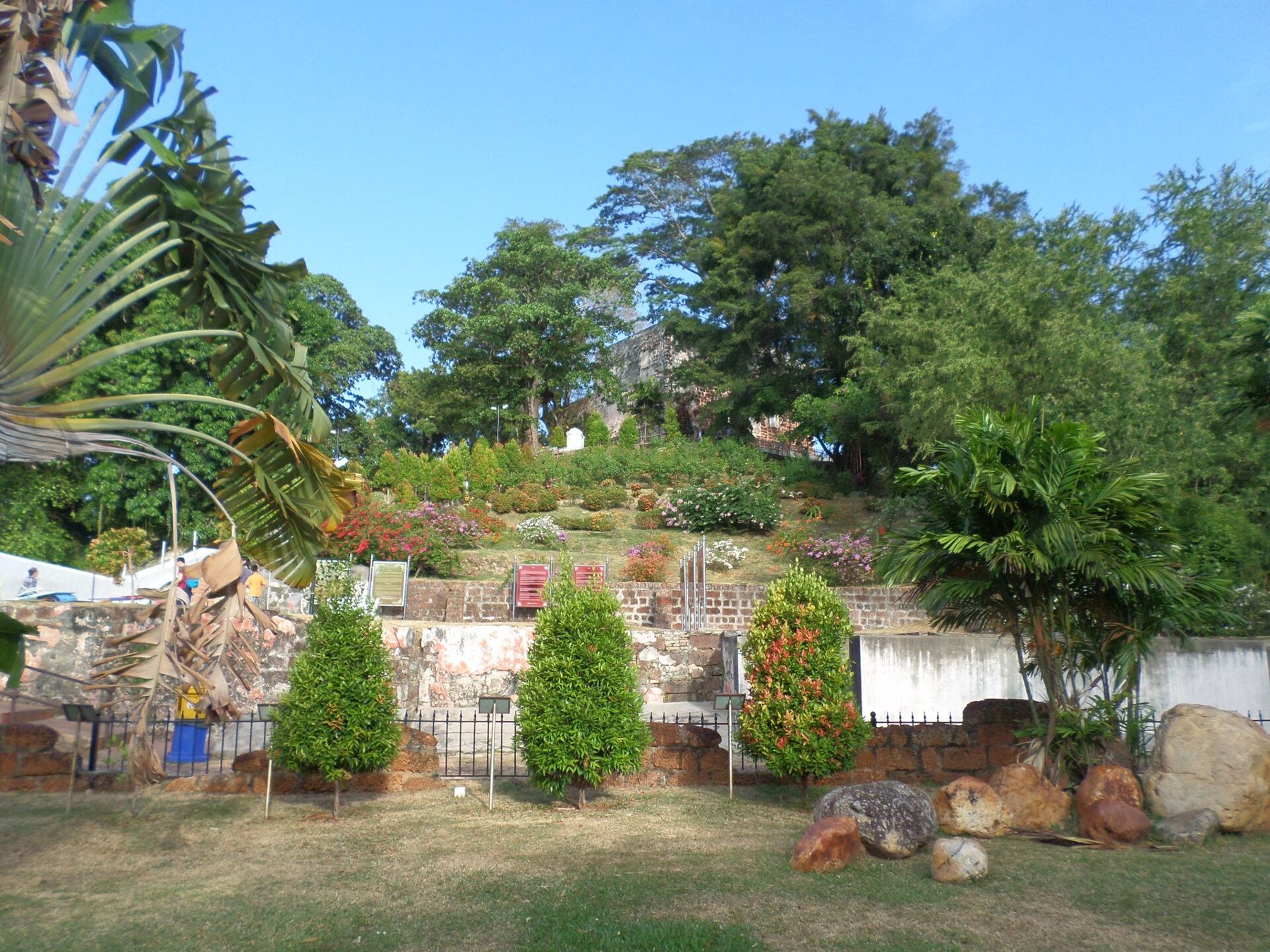
Behind the Stadthuys, steps climb St Paul's Hill. On its summit stand the roofless ruins of St Paul's Church, built by the Portuguese in the early sixteenth century and later used by the Dutch. Old Dutch tombstones line the walls inside, and the open-air church has a weathered statue of St Francis Xavier, the missionary whose body was briefly buried here.
The hilltop is the best viewpoint in the old town, with the river, the rooftops and the strait below. It catches the late-afternoon breeze and the evening light, so try to time your climb for the end of the day.
From the hilltop, paths lead down the other side to the Porta de Santiago, a small stone gateway. It is all that remains of A Famosa, the Portuguese fortress that once encircled the hill. The Dutch repaired it, and the British demolished most of it in the early nineteenth century; this single gate survived. It is a modest structure, but it is one of the oldest surviving European buildings in South-East Asia.
Nearby, at the foot of the hill, a wooden replica of the fifteenth-century Malacca Sultanate palace houses a cultural museum, recalling the city before the Europeans came.
i
Along the river
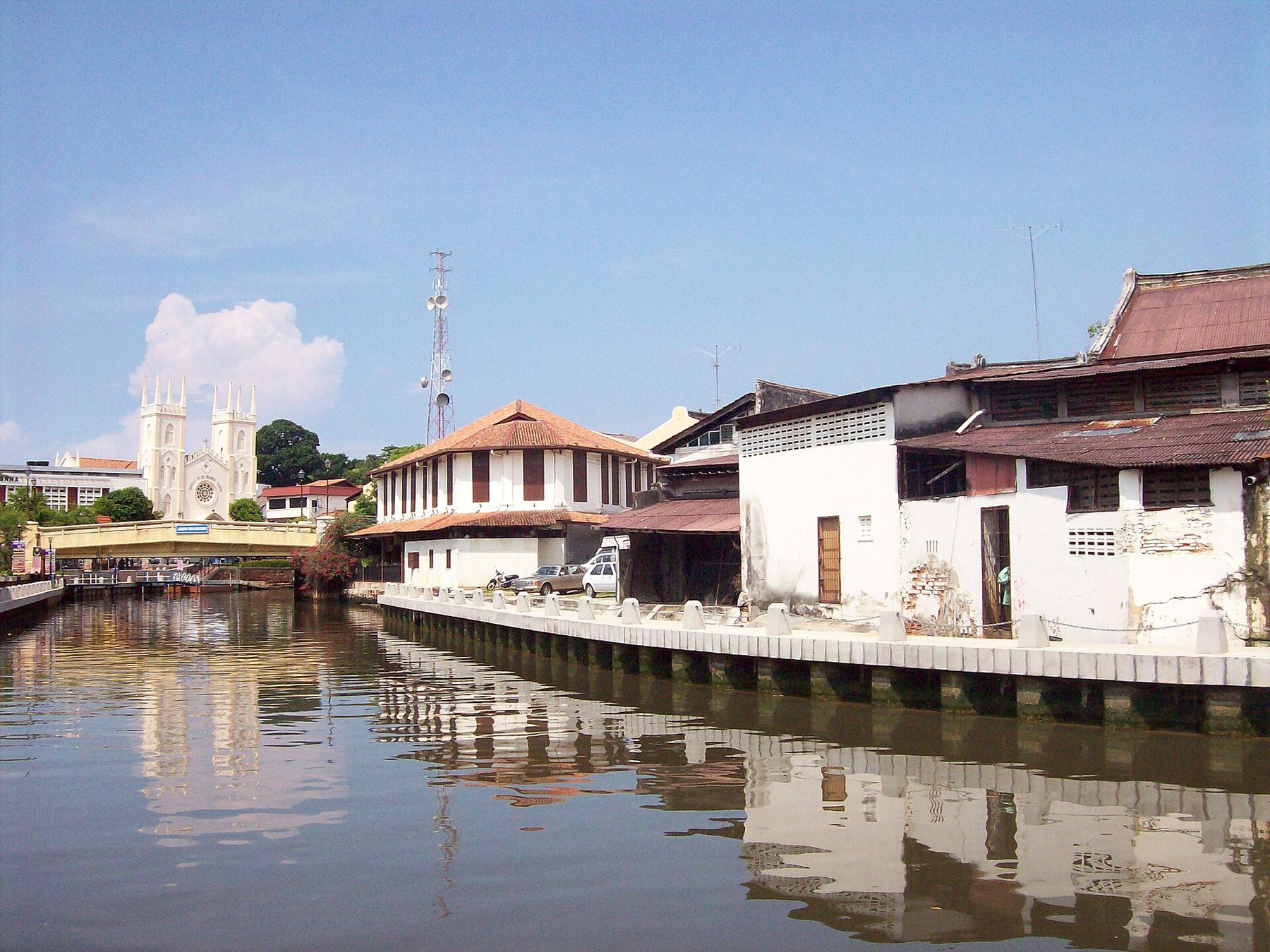
Back at the bridge, paths follow the Melaka River upstream on both banks. Once a busy working waterway, the river has been cleaned and landscaped, with walkways, murals on the walls of the riverside buildings and small bridges. River cruises run along it. In the evening, lights come on along the banks, and the path is a pleasant walk away from the traffic.
i
The riverside walkway is paved on both banks for much of its length, and footbridges cross every few hundred metres, so it is easy to switch sides when the shade moves. Old warehouses and shophouses back onto the water, many repainted and some covered in murals. In the evening the lights come on along the banks and the walk becomes cooler and busier. River cruises leave from a jetty near the square and give a different view of the same buildings, slow and low on the water. Bring water and a hat for the daytime stretches, which have little cover.
Jonker Street and the old Chinese quarter
Across the river from Dutch Square lies the old Chinese quarter, a grid of shophouse streets. Jalan Hang Jebat, better known as Jonker Street, is the main one, lined with shops, cafes and guesthouses. On Friday, Saturday and Sunday evenings it becomes a crowded night market, closed to traffic and packed with food stalls and souvenirs.
Parallel to it, Jalan Tun Tan Cheng Lock, still called Heeren Street, is lined with grand old townhouses built by wealthy Peranakan families, people of mixed Chinese and Malay heritage. One of these houses is open as a museum, with carved screens, family portraits and rooms furnished as they were a century ago.
One street north, Jalan Tokong is sometimes called Harmony Street, like its counterpart in George Town. Here a Chinese temple, a mosque and a Hindu temple stand within a few doors of each other. The Cheng Hoon Teng temple is one of the oldest functioning Chinese temples in Malaysia, with fine roof decorations and a calm courtyard. The Kampung Kling Mosque, nearby, has a pagoda-like minaret that blends Malay, Chinese and other styles.
Each power left its mark, and today the old town holds a layered history in a small area.
The Portuguese settlement and beyond
A few kilometres south-east of the old town, the Portuguese Settlement is home to a community descended from the Portuguese who arrived in the sixteenth century and the local people they married. Some families still speak Kristang, a Portuguese-based creole, and the community celebrates the Festa San Pedro in June with decorated boats and music. It is a residential neighbourhood by the sea, best visited quietly, and it shows another layer of Melaka's mixed past.
Closer to the old town, the Maritime Museum, housed in a full-size replica of a Portuguese sailing ship beside the river, tells the story of the port and the strait. The museums around Dutch Square are numerous and modest; choose one or two rather than trying them all.
i
Hill at four, river after dark
Melaka is hot and humid all year. The best plan is to visit the museums in the middle of the day, climb St Paul's Hill in the late afternoon, and walk the river and Jonker Street in the evening, when the air is cooler and the lights are on. Weekends are much busier than weekdays, especially in the old Chinese quarter. Melaka is a couple of hours by road from Kuala Lumpur and from Singapore; buses run often. Opening hours and entry fees change, so check them for Melaka before you go. For a quieter Straits town, try Ipoh, further north.